Words of the services · Gestures and actions
Prostration
Metani · Greek: μετάνοια (metania)
A reverence of the body made down to the ground, deeper than a bow from the waist. In the Church's service book the priest and the deacon make three metanias as they say the Trisagion inaudibly, and three again before the Holy Table at the invocation of the Holy Spirit over the Gifts. In Russian usage reverences to the ground are not made, with few exceptions, on Sundays and feast days, nor from Pascha to Pentecost.
What it means
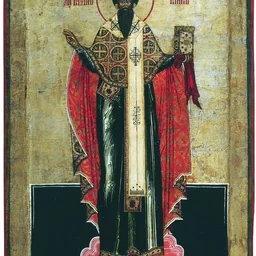 St Basil the Great
«Moreover every time we fall upon our knees and rise from off them we shew by the very deed that by our sin we fell down to earth, and by the loving kindness of our Creator were called back to heaven.»«On Sundays and Feast Days, with few exceptions, the rubric of the Church does not permit kneeling; that is, reverences to the earth. From holy Easter Day until Pentecost (Trinity Sunday) no kneeling is appointed. The joy of the worshippers at that season is held to outweigh even their sense of lowly penitence for sin, which prompts to kneeling.»«The communicant retires and makes a reverent obeisance, but not a prostration; for, having become mystically united to Christ, he is now a child of God, and the prostration is a sign of servitude.»Sokolof, A Manual of the Orthodox Church's Divine Services (1899), p. 76
Where it appears
- 12. The Trisagion
- 41. The epiclesis: the calling down of the Holy Spirit
- Great Vespers on Saturday evening · 22. The Trisagion prayers
- Small Compline · 12. «More honourable» and the blessing
- The prayers before Holy Communion · 14. The three troparia and «Lord, have mercy» forty times
- The prayers before Holy Communion · 15. Verses on how to draw near to the Mysteries