The Divine Liturgy of St John Chrysostom · Step 12
The Trisagion
«Himni Trishenjtor»
What happens
The chanters sing the Trisagion, «O Holy God, Holy Mighty, Holy Immortal One, have mercy upon us», three times, then «Glory to the Father...» with «Holy Immortal One...», and after the deacon's call «Fuqi» (Dynamis) the whole hymn again. The priest and deacon say it quietly with three prostrations, and the priest goes to the high place behind the Holy Table (the altar). On some great feasts, and on Lazarus Saturday, another hymn takes its place.
Who does what
- PriestEnds his quiet prayer aloud, «For holy art thou, O our God...», says the hymn quietly three times with three prostrations, and goes to the high place saying «Blessed is he that cometh...».
- DeaconAt the Holy Doors, facing the people and holding the end of his orarion (stole), says «Let us pray to the Lord»; back inside he calls «Fuqi» and asks «Bless, Master, the seat on high».
- ChantersSing «Amen», the Trisagion three times, «Glory to the Father...» with «Holy Immortal One...», and the whole hymn again after «Fuqi», or on those days the hymn that replaces it.
- PeopleSing the Trisagion quietly with the chanters, or listen, standing or seated as they wish.
When the priest serves without a deacon: Without a deacon the priest says the deacon's calls himself.
The words
The deacon, turned towards the people, on the left side of the Holy Doors, and holding the end of his orarion with the fingers of his right hand, says: (translated by this site)
Dhiaku i kthyer nga populli, nga ana e majtë e Derës së Bukur, dhe duke mbajtur me gjishtrinjtë e dorës së tij të djathtë cepin e Orarit, thotë:
Let us pray to the Lord.
Le t'i lutemi Zotit.
And he returns again into the sanctuary, to his usual place. (translated by this site)
Dhe kthehet përsëri në hierore në vendin e tij të zakonshëm.
Lord, have mercy.
Mëshiro, o Zot.
O holy God, who restest in the Saints; who art hymned by the Seraphim with a thrice-holy cry, and glorified by the Cherubim, and adored by every heavenly Power; who out of nothingness hast brought all things into being; who hast created man after thine own image and likeness, and hast adorned him with every gift of thine; who givest unto those that ask of thee wisdom and understanding; who despisest not the sinner, but hast appointed repentance unto salvation; and hast vouchsafed unto us, thy humble and unworthy servants here, at this hour, to stand before the glory of thy holy Altar, and to render unto thee that adoration and praise which are thy due: Do thou, the same Lord, accept from the mouths of us sinners, the Thrice-Holy song, and visit us with thy beneficence. Pardon us every transgression, whether voluntary or involuntary. Sanctify both our souls and bodies, and grant that we may serve thee in uprightness all the days of our life: through the intercessions of the holy Birth-giver of God, and of all the Saints of all the ages who have been well-pleasing unto thee.
(pa zë) O Perëndi i shenjtë, që prehesh ndër të shenjtët, që himnohesh me zë trishenjtor nga serafimet dhe që lavdërohesh nga keruvimet e që adhurohesh nga çdo fuqi qiellore; ti që krijove gjithësinë nga e mosqena; që bëre njeriun simbas ikonës dhe shëmbëllesës sate, dhe e stolise me tërë dhuratat e tua; ti që i jep urtësi dhe mençuri atij që kërkon, dhe nuk e heq syrin nga mëkatari, por caktove pendimin për shpëtim; ti që na bëre të denjë ne shërbëtorët e tu të përulur dhe të padenjë që të qëndrojmë në këtë orë përpara lavdisë të altarit tënd të shenjtë dhe të të parashtrojmë adhurimin dhe lavdërimin që kemi për detyrë ndaj Teje. Ti, o Zot, prano dhe nga goja e neve mëkatarëve himnin trishenjtor, dhe vështrona me mirësinë tënde. Falna çdo faj të bërë me dashje ose pa dashje; shenjtërona shpirtrat dhe trupat tanë; dhe bëna të denjë që të të adhurojmë me shpresëtari tërë ditët e jetës sonë; me ndërmjetimet e Hyjlindëses së shenjtë dhe të gjithë shenjtorëve që të kanë pëlqyer që prej jete.
For holy art thou, O our God, and unto thee we ascribe glory, to the Father, and to the Son, and to the Holy Spirit, now, and ever;
(me zë të lartë) Se i shenjtë je, o Perëndia ynë, dhe Ty ta drejtojmë lavdinë, Atit e Birit edhe Shpirtit të Shenjtë, tani e përherë,
Even unto ages of ages.
E në jetë të jetëve.
Amen.
Amin.
And immediately they sing: (translated by this site)
Dhe menjëherë psalin:
O Holy God, Holy Mighty, Holy Immortal One, have mercy upon us.
Shenjt Perëndi, Shenjt i fuqishëm, Shenjt i pavdekshëm, mëshirona (tri herë). Lavdi Atit e Birit edhe Shpirtit të Shenjtë. Tani e përherë e në jetë të jetëve. Amin. Shenjt i pavdekshëm, mëshirona.
The priest and the deacon say: «O Holy God...», inaudibly, three times, making three prostrations. When a bishop celebrates, and when more than one priest celebrates, «O Holy God...» they sing this too from the sanctuary. (translated by this site)
Prifti dhe dhiaku thonë: «Shenjt Perëndi...», pa zë, tri herë duke bërë tri metanira. Kur meshon episkop dhe kur meshojnë më shumë se një prift «Shenjt Perëndi...» e psalin dhe këtë nga hierorja.
Dynamis. (translated by this site)
Fuqi.
O Holy God, Holy Mighty, Holy Immortal One, have mercy upon us.
Shenjt Perëndi, Shenjt i fuqishëm, Shenjt i pavdekshëm, mëshirona.
On the day of the Exaltation of the Cross (14 September), in place of «O Holy God...» there is sung the hymn «Thy Cross do we adore, O Master, and thy holy Resurrection do we glorify». On the great feasts of the Nativity of Christ, of Theophany, of Great Pascha, of the Fiftieth Day (Pentecost), and on the Saturday of Saint Lazarus, in place of «O Holy God...» there is sung «As many as have been baptized into Christ have put on Christ. Alleluia.» (translated by this site)
Ditën e Ngritjes së Kryqit (14 shtator) në vend të «Shenjt Perëndi...» psalet himni «Kryqit tënd i falemi, o Zot, dhe Ngjalljen tënde të shenjtë e lavdërojmë». Në të kremtet e mëdha të Krishtlindjes, të Ujit të Bekuar, të Pashkës së Madhe, të Pesëdhjetores (Pendikostisë) si dhe të shtunën e Shën Llazarit në vend të «Shenjt Perëndi...» psalet «Sa u pagëzuat më Krishtin, me Krishtin u veshët. Aliluia.»
Command, Master.
(me zë të ulët) Urdhëro, o Zot.
The priest blesses, saying: (translated by this site)
Prifti bekon duke thënë:
Blessed is he that Cometh in the Name of the Lord.
(me zë të ulët) I bekuar është ai që vjen në emrin e Zotit.
Bless, Master, the seat on high.
(me zë të ulët) Beko, o Zot, fronin lart.
Blessed art thou on the throne of glory of thy kingdom, who sittest on the Cherubim, always, now, and ever, and unto ages of ages.
(me zë të ulët) I bekuar je mbi fronin e lavdisë së mbretërisë sate, ti që rri mbi Keruvimet, gjithnjë; tani e përherë e në jetë të jetëve. Amin.
The Albanian text is the Orthodox Autocephalous Church of Albania’s, used with permission. orthodoxalbania.org. The English is from Isabel F. Hapgood’s Service Book (1922).
What it means
«It is a hymn dedicated to the Holy Trinity, in Whose presence Christians find themselves at the Liturgy. Within the presence of the Kingdom of God, people are enabled by Christ and by the Holy Spirit to hear, to understand and to do the Word of God, which will be announced to them from the throne of the Father.»«Hyrja e Vogël», the Church of Albania · translated by this site
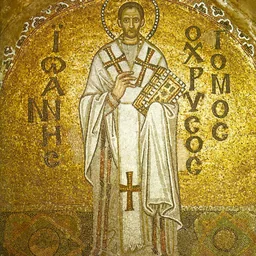 St John Chrysostom
«“How great are the gifts of Christ! On high in heaven the hosts of angels glorify him. Here below, in the holy churches, men sing just as the angels do. In heaven the Seraphim sing the Trisagion. On earth, within the holy churches, the whole body of the faithful sings the same hymn. Thus, then, we have a common festival of the heavenly and the earthly. One song of thanksgiving, of exultation and of joy”.»«Liturgjia Hyjnore (Pjesa I) – Priftmurgu Grigor Kutlumusiani», the Church of Albania · translated by this site
«The Trisagion, which is forthwith said, manifests the mystery of the Trinity; which the Incarnation of one person of the Trinity manifested to men; (') and also the sympathy and union of Angels and men. Wherefore also it is sung within the bema by the Priests, and without it by the clerks and laity: for one Church of Angels and men hath been formed through Christ.»«The reason for this substitution is that, in ancient times, catechumens were wont to receive the sacrament of baptism preferably on those days. The Church has preserved the custom in order that we, who have received baptism, may be mindful of the pledges we then gave.»Sokolof, A Manual of the Orthodox Church's Divine Services (1899), p. 65