Words of the services · Vestments
Omophorion
Omofor · Greek: ὠμοφόριον (omoforion)
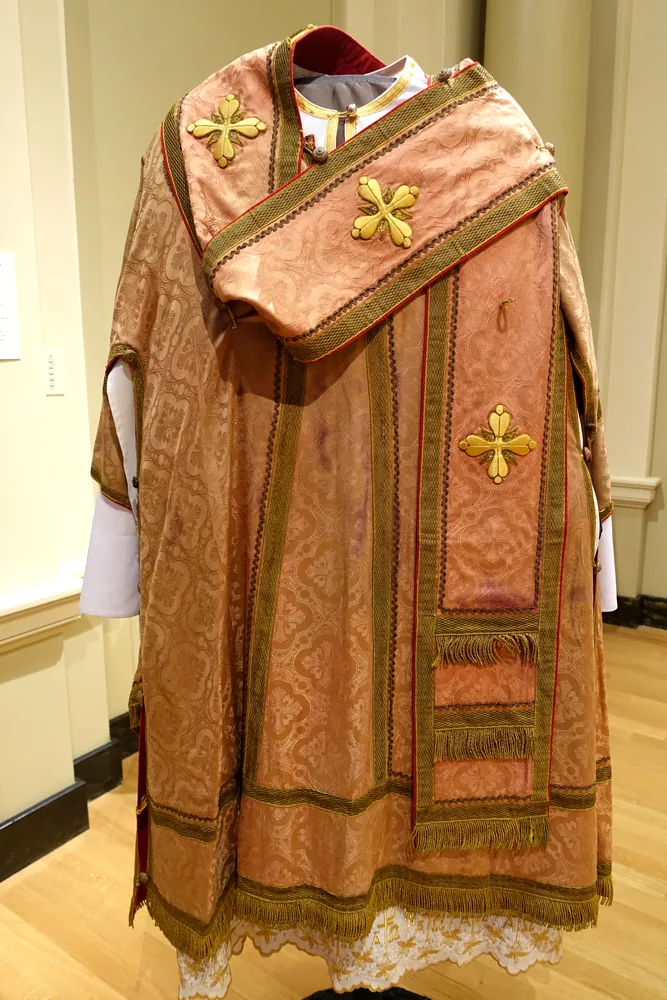
The vestment that belongs to bishops alone: a long, broad band adorned with crosses, laid round the shoulders over the other vestments so that one end hangs down in front and the other behind. It was first made of sheepskin, then of white wool; now it is of the same material as the other vestments. In Russian usage it is taken off before the Epistle and at other set moments, and worn from «Holy things for the holy» until the dismissal.
What it means
«Perhaps bishops too traditionally wore the phelonion, over which they wore the omophorion, the sign of the episcopal office, as the shepherd of the local Church.»«Veshjet», the Church of Albania · translated by this site
«His Pall typifies the wandering sheep, and the Prelate, when arrayed in this vestment, bears the image of the Saviour Christ, who, as the Good Shepherd, took upon his shoulders the wandering sheep and bare it to those who wander not; that is, to the Angels, in his Father's house.»«For since it is the Lord Who is represented as speaking by the Gospel, and is, as it were, Himself present, the Bishop at that time ventures not to be arrayed with the symbol of His Incarnation—I mean the omophorion»