Words of the services · Vestments
Sakkos
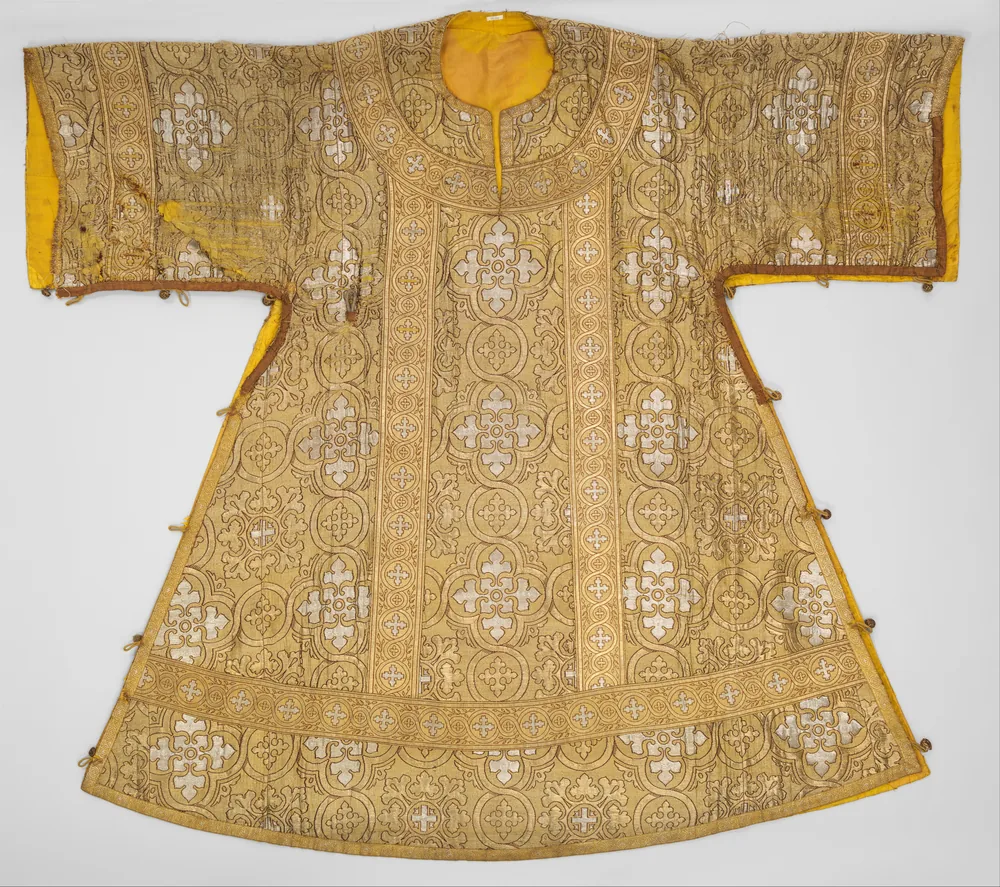
Sako · Greek: σάκκος (sakkos)
The bishop's outer vestment, worn in place of the priest's phelonion: a tunic with short sleeves, closely resembling the deacon's wide-sleeved sticharion, with the omophorion laid over it. It was the emperors' robe; bishops took it up, together with the mitre, after the Christian empire fell to the Turks in the fifteenth century. In Russian usage small bells are attached to it.
What it means
«This Dalmatic (Sákkos) is symbolical of Christ's coat without a seam, woven from top to bottom.»«The bishops adopted this garment, not as a worldly adornment, but as a reminder that they must rise to holiness of life, and called it Saccos, which means a " sackcloth garment," or " garment of humility."»Sokolof, A Manual of the Orthodox Church's Divine Services (1899), p. 29