Words of the services · Vestments
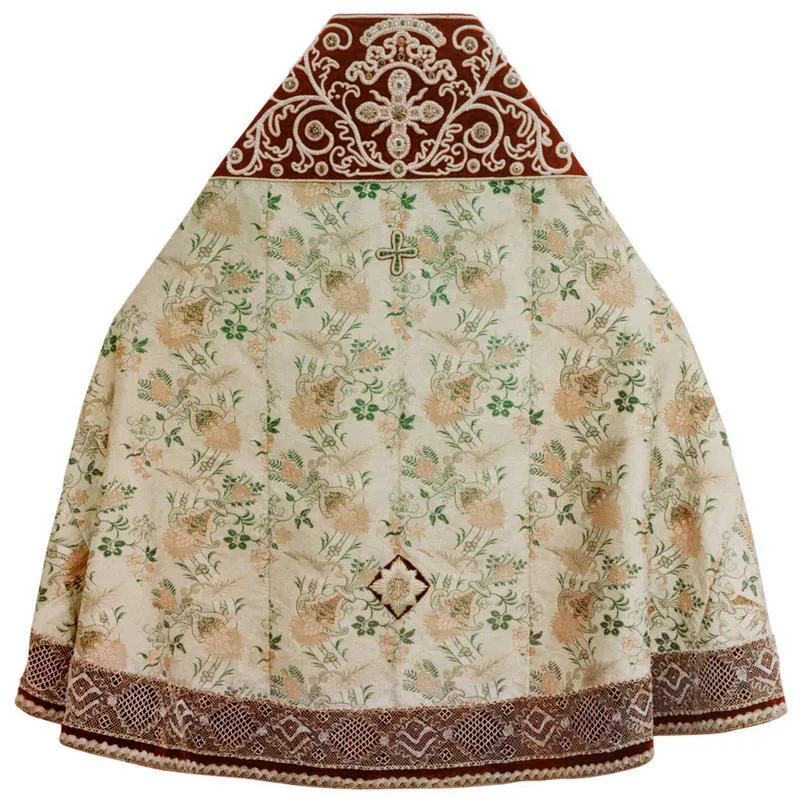
Phelonion
Felon · Greek: φελόνιον (felonion)
The priest's outer vestment, worn over all the others at the Divine Liturgy: a wide, sleeveless garment with an opening for the head, which covers the whole body behind and comes down to the waist in front. As they put it on, priests say verses of a psalm, that the priests of the Lord shall be clothed with righteousness. Bishops once wore it too, with the omophorion over it; they now wear the sakkos in its place.
What it means
«This garment probably developed from the robes of early Christian times and, under the inspiration of Scripture, was identified with the calling of the priestly life.»«Veshjet», the Church of Albania · translated by this site
«The Phelonion has been preserved as one of the priestly vestments, in token that priests are invested with truth, and hedged off by it from all the iniquities which surround them, and consequently should be ministers of the truth.»Sokolof, A Manual of the Orthodox Church's Divine Services (1899), p. 29
«The phelonion and sakkcs point to the humiliation and passion of Christ and instill in the shepherds of Christ’s flock an humble spirit.»