Great Vespers on Saturday evening · Step 9
The dogmatikon; the priest puts on the phelonion
«Hyjlindësorja dogmatike dhe veshja e felonit»
What happens
At «Glory to the Father... now, and ever...» the chanters sing the dogmatikon of the tone, a hymn to the Theotokos (the Virgin Mary); in Tone 1, which the site shows, it begins «Let us sing the praises of Mary». Like the resurrectional stichera, it changes every week through the eight tones. Meanwhile the priest puts on the phelonion, the vestment he has not worn until now, before the entrance that follows.
Who does what
- PriestTakes the phelonion, blesses and kisses it, and puts it on saying «Let us pray to the Lord» and «Thy priests, O Lord, shall clothe themselves with righteousness...».
- ChantersSing «Glory to the Father... now, and ever...» and the dogmatikon of the tone.
- PeopleListen to the hymn to the Theotokos, standing or seated as they wish, and sing quietly with the chanters where they know it.
The words
Glory to the Father, and to the Son, and to the Holy Spirit,
Lavdi Atit...
now, and ever, and unto ages of ages. Amen.
Tani e përherë...
When the saint of the day has a «Glory» (doxastikon) of his own at Vespers, six stichera of the Resurrection are sung from the Octoechos and four of the saint of the day. Glory (doxastikon) of the saint. Now and ever... The hymn to the Theotokos (theotokion) of the Octoechos. When the saint has no doxastikon of his own, seven stichera are sung from those of the Resurrection and three of the saint. Glory... and Now and ever... The theotokion of the tone. (translated by this site)
Kur shenjti i ditës ka në mbrëmësore «Lavdi» (dhoksastikon) të veten, gjashtë stihira të ngjalljes psalen nga Oktoihu dhe katër të shenjtit të ditës. Lavdi (dhoksastikon) e shenjtit. Tani... Hyjlindësorja (Theotoqion) e Oktoihut. Kur shenjti nuk ka lavdi të tijën shtatë stihira psalen nga të ngjalljes dhe tri të shenjtit. Lavdi... dhe Tani... Hyjlindësorja e tingullit.
When «Glory... Now and ever...» is sung, the priest takes the phelonion, blesses it and kisses it, and, putting it on, says: (translated by this site)
Kur psalet «Lavdi... dhe Tani...» prifti merr Fellonin, e bekon dhe e puth dhe duke u veshur thotë:
Let us pray to the Lord.
Le t'i lutemi Zotit.
Thy priests, O Lord, shall clothe themselves with righteousness, and thy Holy Ones shall rejoice with exultation always, now, and ever, and unto ages of ages. Amen.
Priftërinjtë e tu, o Zot, do të vishen me drejtësi dhe oshënarët e tu do të ngazëllohen me ngazëllim. Gjithnjë; tani e përherë e në jetë të jetëve. Amin.
The hymns of the week, as an example: Tone 1
Glory... Now and ever... (translated by this site)
Lavdi dhe Tani
The Dogmatikon (translated by this site)
Hyjlindësorja Dogmatike
Let us sing the praises of Mary, Virgin, Door of heaven, Glory of all the world, sprung forth from man, who also bare the Lord; the Song of the Bodiless Powers, and the Enriching of the faithful. For she revealed herself as Heaven and the Temple of the Godhead. She destroyed the bulwarks of enmity, and ushered in peace, and threw open the kingdom. Wherefore, in that we possess this confirmation of our faith we have a defender, even the Lord who was born of her. Be bold, therefore, be bold, ye people of God, for he, the All-Powerful, will vanquish your foes.
Lavdinë e përbotshme, që u mboll prej njerëzve dhe lindi Kryezotin, derën qiellore, le ta himnojmë, Marinë, Virgjëreshën, këngën e engjëjve dhe zbukurimin e besnikëve, se ajo u tregua qiell dhe tempull i Hyjnisë. Ajo, duke rrëzuar murin ndarës të armiqësisë, solli paqen në vend të saj dhe e çeli mbretërinë. Duke pasur, pra, këtë si spirancë të besës, kemi mbrojtës Zotin që lindi prej saj. Le të ketë, pra, kurajë, le të ketë kurajë populli i Perëndisë, se ai do t'i luftojë armiqtë, si i Tërëfuqishëm.
The Albanian text is the Orthodox Autocephalous Church of Albania’s, used with permission. orthodoxalbania.org. The English is from Isabel F. Hapgood’s Service Book (1922).
What it means
«The Bogoróditchny (Hymns to the Birth-giver of God) are called "Dogmátiki," from the Greek word dogma, or doctrine; so that, together with the praise of the All-holy Birth-giver of God, they contain dogmatic teaching concerning the person of Jesus Christ, and in particular concerning the incarnation of the Lord and the union in his person of two natures — the divine and the human. The Hymn to the Birth-giver of God is sung at this point to remind us that she was the Mediatrix through whom, by the birth of her Holy Son, the life of those who were under the dispensation of the law was assuaged.»«The last of them glorifies the Mother of God and contains the dogma of the Incarnation, whence it has the name of " the Mother of God's Dogmatikon."»Sokolof, A Manual of the Orthodox Church's Divine Services (1899), p. 44
«Normally the special hymns end with a theotokion, in honour of St Mary, the Mother of Christ.»«Shërbesa e Mbrëmjes», the Church of Albania · translated by this site
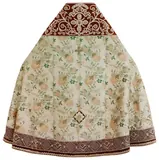 Phelonion