The Divine Liturgy of St John Chrysostom · Step 22
The Liturgy of the Faithful: the first prayer of the faithful
«Liturgjia e Besnikëve: urata e parë e besimtarëve»
What happens
This prayer opens the Liturgy of the Faithful. The antimension, the cloth on which the Holy Gifts will later be set, now lies unfolded on the Holy Table, and the priest prays quietly, giving thanks that God has made the clergy worthy to stand before his altar and asking mercy for their sins and the people's errors. The deacon adds a petition and «Wisdom», and the priest ends with the exclamation, his closing words said aloud.
Who does what
- PriestSays the first prayer of the faithful quietly at the Holy Table, then its closing words aloud, «For unto thee are due all honour, glory and worship…».
- DeaconFrom his usual place before the Holy Doors, the central doors of the icon screen, says «Succour us… by thy grace» and «Wisdom».
- ChantersAnswer «Amen».
- PeoplePray with the clergy and sing «Amen» quietly with the chanters; they may make the sign of the cross, as is the custom.
When the priest serves without a deacon: Without a deacon the priest says «Succour us…» and «Wisdom» himself.
The words
The priest says the first prayer of the faithful, after the unfolding of the antimension: (translated by this site)
Prifti thotë uratën e parë të besimtarëvet, pas hapjes së Andiminsit:
We give thanks unto thee, O Lord God of the Powers, who hast graciously vouchsafed unto us to stand now before thy holy Altar, and fall down in adoration before thy compassion toward our sins, and the errors of the people. Accept our supplications, O God; make us worthy to offer unto thee prayers and supplications, and unbloody sacrifices
(pa zë) Të falenderojmë, o Zot, Perëndi i Fuqive, që na bëre të denjë të qëndrojmë dhe tani përpara altarit tënd të shenjtë dhe të lypim gjunjazi dhembshuritë e Tua, për mëkatet tona dhe për fajet e popullit të bëra nga padija. Prano, o Perëndi, lutjen tonë; bëj që të jemi të denjë të të bëjmë lutje, dhe kërkesa dhe therore të pagjakshme
for all thy people. And enable us, whom thou hast appointed to this thy ministry, by the power of thy Holy Spirit, at all times, and in every place, blamelessly, without offence, and in the witness of a pure conscience, to call upon thee; that hearing us thou mayest show mercy upon us, according to the plenitude of thy goodness.
për tërë popullin tënd; dhe ne që na caktove në këtë shërbesën tënde bëna të aftë, me fuqinë e Shpirtit tënd të Shenjtë, që pa faje dhe pengesa të të thërresim me dëshminë e ndërgjegjes sonë të pastër në çdo kohë dhe vend; në mënyrë që pasi të na dëgjosh, të tregohesh i butë sipas mirësisë sate të shumtë.
Succour us, save us, have mercy upon us, and keep us, O God, by thy grace.
Përkrahna, shpëtona, mëshirona dhe ruajna, o Perëndi, me hirin tënd. Urtësi.
For unto thee are due all honour, glory and worship, to the Father, and to the Son, and to the Holy Spirit, now, and ever and unto, ages of ages.
(me zë të lartë) Se Ty të përket tërë lavdia, nderimi dhe adhurimi, Atit e Birit edhe Shpirtit të Shenjtë, tani e përherë e në jetë të jetëve.
Amen.
Amin.
The Albanian text is the Orthodox Autocephalous Church of Albania’s, used with permission. orthodoxalbania.org. The English is from Isabel F. Hapgood’s Service Book (1922).
What it means
«After the prayer in which God is asked to teach the catechumens the Gospel of Truth, to unite them to the Holy Church and “in due season to make them worthy of the laver of regeneration, of the remission of sins and of the robe of incorruption”, and after the nominal dismissal of the catechumens, two prayers are said for the faithful, who are already members of the Church, that God may hear their prayers and make them worthy to offer and to receive the gifts of Divine Communion»«Lutja e Gjerë», the Church of Albania · translated by this site
«The third part of the Liturgy is named ' The Liturgy of the Faithful," because none but the faithful may be present at the celebration thereof, — i. e. such persons as have received the Sacrament of Baptism and endeavor to live in accordance with the Christian law.»Sokolof, A Manual of the Orthodox Church's Divine Services (1899), p. 67
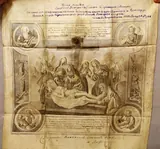 Antimension