The Fathers on the Gospels
← All topics

Topic

Life after Death

The Church confesses that Christ is risen from the dead, trampling down death by death, and that, for the faithful, death has become a sleep: the soul, parted from the body, lives on and awaits the resurrection, and the Church prays for all who have fallen asleep in that hope. Christ will come again with glory to judge the living and the dead, and will render to every man according to his works: the righteous will go into life eternal, and the wicked into everlasting punishment. Here the Fathers teach this faith in their own words.

28 passages from 8 Fathers, drawn from 11 works.

Death Has Become a Sleep

St. Ignatius of Antioch

The Epistle to the Romans, Chapter VI

All the pleasures of the world, and all the kingdoms of this earth, shall profit me nothing. It is better for me to die in behalf of Jesus Christ, than to reign over all the ends of the earth. “For what shall a man be profited, if he gain the whole world, but lose his own soul?” Him I seek, who died for us: Him I desire, who rose again for our sake. This is the gain which is laid up for me. Pardon me, brethren: do not hinder me from living, do not wish to keep me in a state of death; and while I desire to belong to God, do not ye give me over to the world. Suffer me to obtain pure light: when I have gone thither, I shall indeed be a man of God. Permit me to be an imitator of the passion of my God.
St. Athanasius the Great

On the Incarnation of the Word, § 27

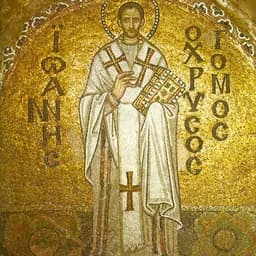
For that death is destroyed, and that the Cross is become the victory over it, and that it has no more power but is verily dead, this is no small proof, or rather an evident warrant, that it is despised by all Christ’s disciples, and that they all take the aggressive against it and no longer fear it; but by the sign of the Cross and by faith in Christ tread it down as dead. 2. For of old, before the divine sojourn of the Saviour took place, even to the saints death was terrible, and all wept for the dead as though they perished. But now that the Saviour has raised His body, death is no longer terrible; for all who believe in Christ tread him under as nought, and choose rather to die than to deny their faith in Christ. For they verily know that when they die they are not destroyed, but actually [begin to] live, and become incorruptible through the Resurrection.

St. John Chrysostom

On the Statues, Homily V

What then, I pray you, is death? Just what it is to put off a garment. For the body is about the soul as a garment; and after laying this aside for a short time by means of death, we shall resume it again with the more splendour. What is death at most? It is a journey for a season; a sleep longer than usual! So that if thou fearest death, thou shouldest also fear sleep! If for those who are dying thou art pained, grieve for those too who are eating and drinking, for as this is natural, so is that! Let not natural things sadden thee; rather let things which arise from an evil choice make thee sorrowful. Sorrow not for the dying man; but sorrow for him who is living in sin!

Homilies on the Gospel of John, Homily LXXXIII (John 18:1)

An awful thing is death, and very full of terror, but not to those who have learnt the true wisdom which is above. For he that knows nothing certain concerning things to come, but deems it to be a certain dissolution and end of life, with reason shudders and is afraid, as though he were passing into non-existence. But we who, by the grace of God, have learnt the hidden and secret things of His wisdom, and deem the action to be a departure to another place, should have no reason to tremble, but rather to rejoice and be glad, that leaving this perishable life we go to one far better and brighter, and which hath no end.

Those Who Have Fallen Asleep

St. Cyril of Jerusalem

The Catechetical Lectures, Mystagogical Lecture V

Then we commemorate also those who have fallen asleep before us, first Patriarchs, Prophets, Apostles, Martyrs, that at their prayers and intercessions God would receive our petition. Then on behalf also of the Holy Fathers and Bishops who have fallen asleep before us, and in a word of all who in past years have fallen asleep among us, believing that it will be a very great benefit to the souls, for whom the supplication is put up, while that holy and most awful sacrifice is set forth.

10. And I wish to persuade you by an illustration. For I know that many say, what is a soul profited, which departs from this world either with sins, or without sins, if it be commemorated in the prayer? For if a king were to banish certain who had given him offence, and then those who belong to them should weave a crown and offer it to him on behalf of those under punishment, would he not grant a remission of their penalties? In the same way we, when we offer to Him our supplications for those who have fallen asleep, though they be sinners, weave no crown, but offer up Christ sacrificed for our sins, propitiating our merciful God for them as well as for ourselves.

St. John Chrysostom

On the Paralytic Let Down Through the Roof, and on the Equality of the Father and the Son

Another perhaps has lost a little daughter or a son, or one of his kinsfolk, and he also having come here listens to Paul groaning over this present life and longing to see that which is to come, and oppressed by his sojourn in this world, and he will go away with a sufficient remedy for his grief when he has heard him say “Now concerning them that are asleep I would not have you ignorant brethren that ye sorrow not even as others who have no hope.” He did not say concerning the dying, but “concerning them that are asleep” proving that death is a sleep. As then if we see any one sleeping we are not disturbed or distressed, expecting that he will certainly get up: even so when we see any one dead, let us not be disturbed or dejected for this also is a sleep, a longer one indeed, but still a sleep. By giving it the name of slumber He comforted the mourners and overthrew the accusation of the unbelievers. If you mourn immoderately over him who has departed you will be like that unbeliever who has no hope of a resurrection.

Homilies on the Gospel of John, Homily LXII (John 11:1,2)

“What then?” saith some one, “Is it possible being man not to weep?” No, neither do I forbid weeping, but I forbid the beating yourselves, the weeping immoderately. I am neither brutal nor cruel. I know that our nature asks and seeks for its friends and daily companions; it cannot but be grieved. As also Christ showed, for He wept over Lazarus. So do thou; weep, but gently, but with decency, but with the fear of God. If so thou weepest, thou dost so not as disbelieving the Resurrection, but as not enduring the separation. Since even over those who are leaving us, and departing to foreign lands, we weep, yet we do this not as despairing.

Homilies on the Gospel of John, Homily LXII (John 11:1,2)

For honor to the dead is not wailings and lamentings, but hymns and psalmodies and an excellent life. The good man when he departeth, shall depart with angels, though no man be near his remains; but the corrupt, though he have a city to attend his funeral, shall be nothing profited. Wilt thou honor him who is gone? Honor him in another way, by alms-deeds, by acts of beneficence and public service. What avail the many lamentations?

While There Is Still Time

St. Athanasius the Great

As preserved in the Catena Aurea on Luke, trans. J. H. Newman, 1841

Now if any one lives so as to die daily, seeing that our life is naturally uncertain, he will not sin, for the greater fear destroys very much pleasure: but the rich man on the contrary, promising to himself length of life, seeks after pleasures, for he says, "Rest," that is, from toil, "eat, drink, and be merry."

St. Cyril of Jerusalem

The Catechetical Lectures, Lecture XVIII: On the Words, And in One Holy Catholic Church, and in the Resurrection of the Flesh, and the Life Everlasting

And if it is said, The dead shall not praise Thee, O Lord, this shews, that since in this life only is the appointed time for repentance and pardon, for which they who enjoy it shall praise the Lord, it remains not after death for them who have died in sins to give praise as the receivers of a blessing, but to bewail themselves; for praise belongs to them who give thanks, but to them who are under the scourge, lamentation. Therefore the just then offer praise; but they who have died in sins have no further season for confession.

St. John Chrysostom

Homilies on the Gospel of Matthew, Homily LIII (Matthew 15:32)

Know ye not in the day of death how sins make the soul shrink? how they stir up the heart from beneath? At that time therefore, when such things are happening, the remembrance of good works stands by us, like a calm in a storm, and comforts the perturbed soul.

For if we be wakeful, even during our life this fear will be ever present with us; but, insensible as we are, it will surely come upon us when we are cast out from hence. Because the prisoner too is then most grieved, when they are leading him out to the court; then most trembles, when he is near the judgment-seat, when he must give his account. For the same kind of reason most persons may be then heard relating horrors, and fearful visions, the sight whereof they that are departing may not endure, but often shake their very bed with much vehemence, and gaze fearfully on the bystanders, the soul urging itself inwards, unwilling to be torn away from the body, and not enduring the sight of the coming angels. Since if human beings that are awful strike terror into us beholding them; when we see angels threatening, and stern powers, among our visitors; what shall we not suffer, the soul being forced from the body, and dragged away, and bewailing much, all in vain?

Homilies on the Gospel of Matthew, Homily LXXVIII (Matthew 25:1-30)

Having heard these things, those virgins went their way; but they profited nothing. And this He saith, either pursuing the parable, and working it up; or also by these things showing, that though we should become humane after our departure, we shall gain nothing from thence towards our escape. Therefore neither did their forwardness avail these virgins, because they went to them that sell not here, but there; nor the rich man, when he became so charitable, as even to be anxious about his relations. For he that was passing by him that was laid at the gate, is eager to rescue from perils and from hell them whom he did not so much as see, and entreats that some be sent to tell them these things. But nevertheless, he derived no benefit from thence, as neither did these virgins.

Homilies on the Gospel of Matthew, Homily LXXVIII (Matthew 25:1-30)

“Watch therefore, for ye know not the day nor the hour.” Seest thou how continually He adds this, showing how awful our ignorance concerning our departure hence? Where now are they, who throughout all their life are remiss, but when they are blamed by us, are saying, At the time of my death, I shall leave money to the poor. Let them listen to these words, and be amended. For indeed at that time many have failed of this, having been snatched away at once, and not permitted so much as to give charge to their relations touching what they wished to be done.

St. Augustine of Hippo

Tractates on the Gospel of John, Tractate XLIV (John 9:1–41)

But after the resurrection of the living and the dead, when He shall say to those placed at His right hand, “Come, ye blessed of my Father, receive the kingdom;” and to those at His left, “Depart into everlasting fire, prepared for the devil and his angels;” then shall be the night when no man can work, but only get back what he has wrought before. There is a time for working, another for receiving; for the Lord shall render to every one according to his works. While thou livest, be doing, if thou art to be doing at all; for then shall come that appalling night, to envelope the wicked in its folds. But even now every unbeliever, when he dies, is received within that night: there is no work to be done there. In that night was the rich man burning, and asking a drop of water from the beggar’s finger; he mourned, agonized, confessed, but no relief was vouchsafed. He even endeavored to do good; for he said to Abraham, “Father Abraham, send Lazarus to my brethren, that he may tell them what is being done here, lest they also come into this place of torment.” Unhappy man! when thou wert living, then was the time for working: now thou art already in the night, in which no man can work.

The Soul after Death

St. Ambrose of Milan

From his Exposition of the Gospel of Luke, as preserved in the Catena Aurea on Luke (on Luke 23:39–43), Oxford ed. (J. H. Parker, 1841–45)

The thief asked that He should remember him, but our Lord answers, Verily I say unto thee, This day shalt thou be with Me in Paradise. To be with Christ is life, and where Christ is, there is His kingdom.

St. Jerome

Commentary on Matthew (on Matthew 22:23–32)

To prove the immortality of souls therefore, He brings forward an instance out of Moses, "I am the God of Abraham, &c." ... so that having established that souls abide after death, (forasmuch as God could not be the God of those who had no existence any where,) there might fitly come in the resurrection of bodies which had together with their souls done good or evil.

St. Augustine of Hippo

Tractates on the Gospel of John, Tractate XLIX (John 11:1–54)

Therefore, to make this the occasion of instructing your Charity, all souls have, when they quit this world, their different receptions. The good have joy; the evil, torments. But when the resurrection takes place, both the joy of the good will be fuller and the torments of the wicked heavier, when they shall be tormented in the body. The holy patriarchs, prophets, apostles, martyrs, and good believers, have been received into peace; but all of them have still in the end to receive the fulfillment of the divine promises; for they have been promised also the resurrection of the flesh, the destruction of death, and eternal life with the angels. This we have all to receive together; for the rest, which is given immediately after death, every one, if worthy of it, receives when he dies. The patriarchs first received it—think only from what they rest; the prophets afterwards; more recently the apostles; still more lately the holy martyrs, and day by day the good and faithful. Thus some have now been in that rest for long, some not so long; others for fewer years, and others whose entrance therein is still less than recent. But when they shall wake from this sleep, they shall all together receive the fulfillment of the promise.

The Judgment to Come

St. Cyril of Jerusalem

The Catechetical Lectures, Lecture XVIII: On the Words, And in One Holy Catholic Church, and in the Resurrection of the Flesh, and the Life Everlasting

Thou hast different sorts of servants: and some are good and some bad; thou honourest therefore the good, and smitest the bad. And if thou art a judge, to the good thou awardest praise, and to the transgressors, punishment. Is then justice observed by thee a mortal man; and with God, the ever changeless King of all, is there no retributive justice? Nay, to deny it is impious. For consider what I say. Many murderers have died in their beds unpunished; where then is the righteousness of God? Yea, ofttimes a murderer guilty of fifty murders is beheaded once; where then shall he suffer punishment for the forty and nine? Unless there is a judgment and a retribution after this world, thou chargest God with unrighteousness. Marvel not, however, because of the delay of the judgment; no combatant is crowned or disgraced, till the contest is over; and no president of the games ever crowns men while yet striving, but he waits till all the combatants are finished, that then deciding between them he may dispense the prizes and the chaplets. Even thus God also, so long as the strife in this world lasts, succours the just but partially, but afterwards He renders to them their rewards fully.

The Catechetical Lectures, Lecture XV: On the Clause, And Shall Come in Glory to Judge the Quick and the Dead; Of Whose Kingdom There Shall Be No End

Let us dread then, brethren, lest God condemn us; who needs not examination or proofs, to condemn. Say not, In the night I committed fornication, or wrought sorcery, or did any other thing, and there was no man by. Out of thine own conscience shalt thou be judged, thy thoughts the meanwhile accusing or else excusing, in the day when God shall judge the secrets of men. The terrible countenance of the Judge will force thee to speak the truth; or rather, even though thou speak not, it will convict thee. For thou shalt rise clothed with thine own sins, or else with thy righteous deeds.

The Catechetical Lectures, Lecture XV: On the Clause, And Shall Come in Glory to Judge the Quick and the Dead; Of Whose Kingdom There Shall Be No End

Terrible in good truth is the judgment, and terrible the things announced. The kingdom of heaven is set before us, and everlasting fire is prepared. How then, some one will say, are we to escape the fire? And how to enter into the kingdom? I was an hungered, He says, and ye gave Me meat. Learn hence the way; there is here no need of allegory, but to fulfil what is said. I was an hungered, and ye gave Me meat; I was thirsty, and ye gave Me drink; I was a stranger, and ye took Me in; naked, and ye clothed Me; I was sick, and ye visited Me; I was in prison, and ye came unto Me. These things if thou do, thou shalt reign together with Him; but if thou do them not, thou shalt be condemned. At once then begin to do these works, and abide in the faith; lest, like the foolish virgins, tarrying to buy oil, thou be shut out. Be not confident because thou merely possessest the lamp, but constantly keep it burning.

St. John Chrysostom

On the Statues, Homily XIII

Oh! that it were possible that I could perform good works as your substitute, and that you could receive the rewards of those works! Then I would not give you so much trouble. But how can I do this? The thing is impossible; for to every man will He render according to his own works. Wherefore as a mother, when she beholds her son in a fever, while she witnesses his sufferings from choking and inflammation, frequently bewails him, and says to him, “O my son, would that I could sustain thy fever, and draw off its flame upon myself!” so now I say, Oh! that by labouring as your substitute, I could do good works for you all! But no, this is not to be done. But of his own doings must each man give the account, and one cannot see one person suffer punishment in the room of another. For this reason I am pained and mourn, that on That Day, when ye are called to judgment, I shall not be able to assist you, since, to say the truth, no such confidence of speech with God belongs to me.

Homilies on the Gospel of John, Homily XXVIII (John 3:17)

For there are two Advents of Christ, that which has been, and that which is to be; and the two are not for the same purpose; the first came to pass not that He might search into our actions, but that He might remit; the object of the second will be not to remit, but to enquire. Therefore of the first He saith, “I came not to condemn the world, but to save the world” (c. iii. 17); but of the second, “When the Son shall have come in the glory of His Father, He shall set the sheep on His right hand, and the goats on His left.” (Matt. xxv. 31, 46.) And they shall go, these into life; and these into eternal punishment.

Eternal Life

St. John Chrysostom

On Eutropius, after He Had Been Found Outside the Church and Taken Captive

As gifts of betrothal God has given us present blessings: they are an earnest of the future; but the full dowry abides in the other world. How so? I will tell you. Here I grow old, there I grow not old; here I die, there I die not, here I sorrow, there I sorrow not; here is poverty, and disease, and intrigue, there nothing of that kind exists: here is darkness and light, there is light alone: here is intrigue, there is liberty; here is disease, there is health; here is life which has an end, there is life which hath no end; here is sin, there is righteousness, and sin is banished; here is envy, there nothing of the kind exists.

St. Augustine of Hippo

Tractates on the Gospel of John, Tractate LXVII (John 14:1–3)

All alike have that penny, which the householder orders to be given to all that have wrought in the vineyard, making no distinction therein between those who have labored less and those who have labored more: by which penny, of course, is signified eternal life, whereto no one any longer lives to a different length than others, since in eternity life has no diversity in its measure. But the many mansions point to the different grades of merit in that one eternal life. For there is one glory of the sun, another glory of the moon, and another glory of the stars: for one star differeth from another star in glory; and so also the resurrection of the dead. The saints, like the stars in the sky, obtain in the kingdom different mansions of diverse degrees of brightness; but on account of that one penny no one is cut off from the kingdom; and God will be all in all in such a way, that, as God is love, love will bring it about that what is possessed by each will be common to all. For in this way every one really possesses it, when he loves to see in another what he has not himself. There will not, therefore, be any envying amid this diversity of brightness, since in all of them will be reigning the unity of love.

Tractates on the Gospel of John, Tractate CXI (John 17:24–26)

For after saying, “I will that they also be with me where I am,” He went on immediately to add, “That they may behold my glory, which Thou gavest me: for Thou lovedst me before the foundation of the world.” “That they may behold,” He said; not, that they may believe. This is faith’s wages, not faith itself. For if faith has been correctly defined in the Epistle to the Hebrews as “the assurance [conviction] of things that are not seen,” why may not the wages of faith be defined, the beholding of things which were hoped for in faith?

The Fire That Is Not Quenched

Eusebius of Caesarea

Church History, Book IV, Chapter XV

But Polycarp said, ‘Thou threatenest a fire which burneth for an hour, and after a little is quenched; for thou knowest not the fire of the future judgment and of the eternal punishment which is reserved for the impious. But why dost thou delay? Do what thou wilt.’

St. John Chrysostom

Homilies on the Gospel of Matthew, Homily XXIII (Matthew 7:1)

No doubt hell, and that punishment, is a thing not to be borne. Yet though one suppose ten thousand hells, he will utter nothing like what it will be to fail of that blessed glory, to be hated of Christ, to hear “I know you not,” to be accused for not feeding Him when we saw Him an hungered. Yea, better surely to endure a thousand thunderbolts, than to see that face of mildness turning away from us, and that eye of peace not enduring to look upon us. For if He, while I was an enemy, and hating Him, and turning from Him, did in such wise follow after me, as not to spare even Himself, but to give Himself up unto death: when after all this I do not vouchsafe to Him so much as a loaf in His hunger, with what kind of eyes shall I ever again behold Him?

Homilies on the Gospel of Matthew, Homily LXXIX (Matthew 25:31)

But to the others He saith, "Depart from me, ye cursed," (no longer of the Father; for not He laid the curse upon them, but their own works), "into the everlasting fire, prepared," not for you, but "for the devil and his angels." For concerning the kingdom indeed, when He had said, "Come, inherit the kingdom," He added, "prepared for you before the foundation of the world;" but concerning the fire, no longer so, but, "prepared for the devil." I, saith He, prepared the kingdom for you, but the fire no more for you, but "for the devil and his angels;" but since ye cast yourselves therein, impute it to yourselves.