Words of the services · Objects and vessels
Incense
Temjan · Greek: θυμίαμα / λιβάνι (thymiama / livani)
Incense is a hardened aromatic resin, a fragrant tree gum that gives off its scent when it is burned. It is burned in the censer at all the services of the Church, to cense the Holy Table, the icons, the clergy, the faithful and the church. Before the censing the priest blesses it with a short prayer, offering it to Christ as a spiritual fragrance.
What it means
«Incense is a symbol of the rising up of prayer, of spiritual sacrifice and of the sweet fragrance of the Kingdom of God.»«Simbolet e krishtera», the Church of Albania · translated by this site
«Thus incense is an aid in prayers and church services, and its burning signifies the lifting up of our mind and heart to heaven at the moment of prayer.»«Temjani», the Church of Albania · translated by this site
«The censing before the Holy Door signifies the desire of the worshippers that their prayers shall be borne up to the throne of God, as the incense from the censer is wafted heavenward; and that their petitions shall be well-pleasing to God like fragrant incense. The censing of the people is symbolical of the grace of the Holy Spirit, which is shed abroad everywhere, upon all men.»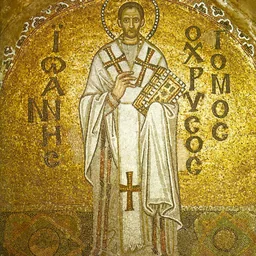 St John Chrysostom
«“For,” observes Saint John Chrysostom, “if someone entering the palace of an earthly king is careful of his walk, his gaze and all his bearing, how is it possible that, when he enters the palace of the heavenly King, he should laugh and behave in an unseemly way? And when we cense the church with visible incense, shall we not strive to be cleansed of invisible impurities as well?”»«Kisha e shenjtë – Priftmurgu Grigor Kutlumusiani», the Church of Albania · translated by this site