The Fathers on the Gospels
← All topics

Topic

The Holy Trinity

The Church confesses one God in three Persons, the Father, the Son and the Holy Spirit: the Trinity, consubstantial and undivided. The Son is begotten of the Father before all ages; the Holy Spirit proceeds from the Father and together with the Father and the Son is worshipped and glorified. Here the Fathers teach this faith in their own words.

38 passages from 9 Fathers, drawn from 9 works.

One God in Three Persons

St. Cyril of Jerusalem

The Catechetical Lectures, Lecture XVI: On the Article, And in One Holy Ghost, the Comforter, Which Spake in the Prophets

Our hope is in Father, and Son, and Holy Ghost. We preach not three Gods; let the Marcionites be silenced; but with the Holy Ghost through One Son, we preach One God. The Faith is indivisible; the worship inseparable. We neither separate the Holy Trinity, like some; nor do we as Sabellius work confusion. But we know according to godliness One Father, who sent His Son to be our Saviour; we know One Son, who promised that He would send the Comforter from the Father; we know the Holy Ghost, who spake in the Prophets, and who on the day of Pentecost descended on the Apostles in the form of fiery tongues, here, in Jerusalem, in the Upper Church of the Apostles; for in all things the choicest privileges are with us.
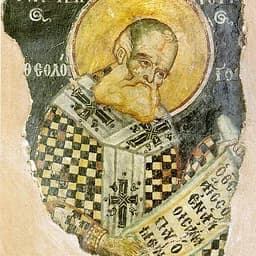
St. Gregory the Theologian

Theological Oration III (On the Son)

The three most ancient opinions concerning God are Anarchia, Polyarchia, and Monarchia. The first two are the sport of the children of Hellas, and may they continue to be so. For Anarchy is a thing without order; and the Rule of Many is factious, and thus anarchical, and thus disorderly. For both these tend to the same thing, namely disorder; and this to dissolution, for disorder is the first step to dissolution.

But Monarchy is that which we hold in honour. It is, however, a Monarchy that is not limited to one Person, for it is possible for Unity if at variance with itself to come into a condition of plurality; but one which is made of an equality of Nature and a Union of mind, and an identity of motion, and a convergence of its elements to unity—a thing which is impossible to the created nature—so that though numerically distinct there is no severance of Essence. Therefore Unity having from all eternity arrived by motion at Duality, found its rest in Trinity. This is what we mean by Father and Son and Holy Ghost.

Theological Oration V (On the Holy Spirit)

The Father was the True Light which lighteneth every man coming into the world. The Son was the True Light which lighteneth every man coming into the world. The Other Comforter was the True Light which lighteneth every man coming into the world. Was and Was and Was, but Was One Thing. Light thrice repeated; but One Light and One God. This was what David represented to himself long before when he said, In Thy Light shall we see Light. And now we have both seen and proclaim concisely and simply the doctrine of God the Trinity, comprehending out of Light (the Father), Light (the Son), in Light (the Holy Ghost).

Theological Oration V (On the Holy Spirit)

To us there is One God, for the Godhead is One, and all that proceedeth from Him is referred to One, though we believe in Three Persons. For one is not more and another less God; nor is One before and another after; nor are They divided in will or parted in power; nor can you find here any of the qualities of divisible things; but the Godhead is, to speak concisely, undivided in separate Persons; and there is one mingling of Light, as it were of three suns joined to each other. When then we look at the Godhead, or the First Cause, or the Monarchia, that which we conceive is One; but when we look at the Persons in Whom the Godhead dwells, and at Those Who timelessly and with equal glory have their Being from the First Cause—there are Three Whom we worship.

St. Gregory of Nyssa

The Great Catechism, Chapter III

And so one who severely studies the depths of the mystery, receives secretly in his spirit, indeed, a moderate amount of apprehension of the doctrine of God’s nature, yet he is unable to explain clearly in words the ineffable depth of this mystery. As, for instance, how the same thing is capable of being numbered and yet rejects numeration, how it is observed with distinctions yet is apprehended as a monad, how it is separate as to personality yet is not divided as to subject matter. For, in personality, the Spirit is one thing and the Word another, and yet again that from which the Word and Spirit is, another. But when you have gained the conception of what the distinction is in these, the oneness, again, of the nature admits not division, so that the supremacy of the one First Cause is not split and cut up into differing Godships, neither does the statement harmonize with the Jewish dogma, but the truth passes in the mean between these two conceptions, destroying each heresy, and yet accepting what is useful to it from each.

St. Augustine of Hippo

Tractates on the Gospel of John, Tractate XXXVI (John 8:15–18)

Thou hast heard, “Because I am not alone, but I and the Father that sent me:” hear how thou mayest believe Father and Son; hear the Son Himself, “I and the Father are one.” He said not, I am the Father; or, I and the Father is one person; but when He says, “I and the Father are one,” hear both, both the one, unum, and the are, sumus, and thou shalt be delivered both from Charybdis and from Scylla. In these two words, in that He said one, He delivers thee from Arius; in that He said are, He delivers thee from Sabellius. If one, therefore not diverse; if are, therefore both Father and Son. For He would not say are of one person; but, on the other hand, He would not say one of diverse.

The Father, the One Source

St. Cyril of Jerusalem

The Catechetical Lectures, Lecture VII: The Father

God then is in an improper sense the Father of many, but by nature and in truth of One only, the Only-begotten Son, our Lord Jesus Christ; not having attained in course of time to being a Father, but being ever the Father of the Only-begotten. Not that being without a Son before, He has since by change of purpose become a Father: but before every substance and every intelligence, before times and all ages, God hath the dignity of Father, magnifying Himself in this more than in His other dignities; and having become a Father, not by passion, or union, not in ignorance, not by effluence, not by diminution, not by alteration, for every good gift and every perfect gift is from above, coming down from the Father of lights, with whom can be no variation, neither shadow of turning.

The Catechetical Lectures, Lecture XI: On the Words, the Only-Begotten Son of God, Begotten of the Father Very God Before All Ages, by Whom All Things Were Made

Suffer none to speak of a beginning of the Son in time, but as a timeless Beginning acknowledge the Father. For the Father is the Beginning of the Son, timeless, incomprehensible, without beginning. The fountain of the river of righteousness, even of the Only-begotten, is the Father, who begat Him as Himself only knoweth.

St. Gregory the Theologian

Theological Oration III (On the Son)

The Father is the Begetter and the Emitter; without passion of course, and without reference to time, and not in a corporeal manner. The Son is the Begotten, and the Holy Ghost the Emission; for I know not how this could be expressed in terms altogether excluding visible things. For we shall not venture to speak of “an overflow of goodness,” as one of the Greek Philosophers dared to say, as if it were a bowl overflowing, and this in plain words in his Discourse on the First and Second Causes. Let us not ever look on this Generation as involuntary, like some natural overflow, hard to be retained, and by no means befitting our conception of Deity. Therefore let us confine ourselves within our limits, and speak of the Unbegotten and the Begotten and That which proceeds from the Father, as somewhere God the Word Himself saith.

Theological Oration IV (Which is the Second Concerning the Son)

For that the same thing should be at once greater than and equal to the same thing is an impossibility; and the evident solution is that the Greater refers to origination, while the Equal belongs to the Nature; and this we acknowledge with much good will. But perhaps some one else will back up our attack on your argument, and assert, that That which is from such a Cause is not inferior to that which has no Cause; for it would share the glory of the Unoriginate, because it is from the Unoriginate. And there is, besides, the Generation, which is to all men a matter so marvellous and of such Majesty. For to say that he is greater than the Son considered as man, is true indeed, but is no great thing. For what marvel is it if God is greater than man?

St. Augustine of Hippo

Tractates on the Gospel of John, Tractate XL (John 8:28–32)

What means this, “I do nothing of myself”? Of myself I am not. For the Son is God, of the Father; but the Father is God, yet not of the Son. The Son is God of God, and the Father is God, but not of God. The Son is light of light; and the Father is light, but not of light. The Son is, but there is [One] of whom He is; and the Father is, but there is none of whom He is.

Tractates on the Gospel of John, Tractate LXXVIII (John 14:27, 28)

Christ Himself, therefore, the Son of God, equal with the Father because in the form of God, inasmuch as He emptied Himself, without losing the form of God, but assuming that of a servant, is greater even than Himself; because the unlost form of God is greater than the assumed form of a servant. And what, then, is there to wonder at, or what is there out of place, if, in reference to this servant-form, the Son of God says, “The Father is greater than I;” and in speaking of the form of God, the self-same Son of God declares, “I and my Father are one”? For one they are, inasmuch as “The Word was God;” and greater is the Father, inasmuch as “the Word was made flesh.”

The Son, Begotten of the Father before All Ages

St. Hilary of Poitiers

St. Cyril of Jerusalem

The Catechetical Lectures, Lecture XI: On the Words, the Only-Begotten Son of God, Begotten of the Father Very God Before All Ages, by Whom All Things Were Made

And whenever thou hear of God begetting, sink not down in thought to bodily things, nor think of a corruptible generation, lest thou be guilty of impiety. God is a Spirit, His generation is spiritual: for bodies beget bodies, and for the generation of bodies time needs must intervene; but time intervenes not in the generation of the Son from the Father. And in our case what is begotten is begotten imperfect: but the Son of God was begotten perfect; for what He is now, that is He also from the beginning, begotten without beginning.

St. Gregory the Theologian

Theological Oration IV (Which is the Second Concerning the Son)

In my opinion He is called Son because He is identical with the Father in Essence; and not only for this reason, but also because He is Of Him. And He is called Only-Begotten, not because He is the only Son and of the Father alone, and only a Son; but also because the manner of His Sonship is peculiar to Himself and not shared by bodies. And He is called the Word, because He is related to the Father as Word to Mind; not only on account of His passionless Generation, but also because of the Union, and of His declaratory function. Perhaps too this relation might be compared to that between the Definition and the Thing defined since this also is called Λόγος. For, it says, he that hath mental perception of the Son (for this is the meaning of Hath Seen) hath also perceived the Father; and the Son is a concise demonstration and easy setting forth of the Father’s Nature. For every thing that is begotten is a silent word of him that begat it.

St. Gregory of Nyssa

The Great Catechism, Chapter I

As in our own case we say that the word is from the mind, and no more entirely the same as the mind, than altogether other than it (for, by its being from it, it is something else, and not it; still by its bringing the mind in evidence it can no longer be considered as something other than it; and so it is in its essence one with mind, while as a subject it is different), in like manner, too, the Word of God by its self-subsistence is distinct from Him from whom it has its subsistence; and yet by exhibiting in itself those qualities which are recognized in God it is the same in nature with Him who is recognizable by the same distinctive marks.

For whether one adopts goodness, or power, or wisdom, or eternal existence, or the incapability of vice, death, and decay, or an entire perfection, or anything whatever of the kind, to mark one’s conception of the Father, by means of the same marks he will find the Word that subsists from Him.

St. John Chrysostom

Homilies on the Gospel of John, Homily IV (John 1:1)

As therefore the expression, “In the beginning was the Word,” shows His Eternity, so “was in the beginning with God,” has declared to us His Co-eternity. For that you may not, when you hear “In the beginning was the Word,” suppose Him to be Eternal, and yet imagine the life of the Father to differ from His by some interval and longer duration, and so assign a beginning to the Only-Begotten, he adds, “was in the beginning with God”; so eternally even as the Father Himself, for the Father was never without the Word, but He was always God with God, yet Each in His proper Person.

St. Augustine of Hippo

Tractates on the Gospel of John, Tractate XX (John 5:19)

Even as the Father is without age, so the Son is without growth; neither has the one grown old nor the other increased, but equal begat equal, eternal begat eternal. How, says some one, has eternal begat eternal? As a temporary flame generates a temporary light. The generating flame is coeval with the light which it generates: the generating flame does not precede in time the generated light; but from the moment the flame begins, from that moment the light begins. Show me flame without light, and I show thee God the Father without Son.

The Holy Spirit, Lord and Giver of Life

St. Cyril of Jerusalem

The Catechetical Lectures, Lecture IV: On the Ten Points of Doctrine

Believe thou also in the Holy Ghost, and hold the same opinion concerning Him, which thou hast received to hold concerning the Father and the Son, and follow not those who teach blasphemous things of Him. But learn thou that this Holy Spirit is One, indivisible, of manifold power; having many operations, yet not Himself divided; Who knoweth the mysteries, Who searcheth all things, even the deep things of God: Who descended upon the Lord Jesus Christ in form of a dove; Who wrought in the Law and in the Prophets; Who now also at the season of Baptism sealeth thy soul; of Whose holiness also every intellectual nature hath need: against Whom if any dare to blaspheme, he hath no forgiveness, neither in this world, nor in that which is to come: “Who with the Father and the Son together” is honoured with the glory of the Godhead: of Whom also thrones, and dominions, principalities, and powers have need. For there is One God, the Father of Christ; and One Lord Jesus Christ, the Only-begotten Son of the Only God; and One Holy Ghost, the sanctifier and deifier of all, Who spake in the Law and in the Prophets, in the Old and in the New Testament.

St. Gregory the Theologian

Theological Oration V (On the Holy Spirit)

If ever there was a time when the Father was not, then there was a time when the Son was not. If ever there was a time when the Son was not, then there was a time when the Spirit was not. If the One was from the beginning, then the Three were so too. If you throw down the One, I am bold to assert that you do not set up the other Two. For what profit is there in an imperfect Godhead? Or rather, what Godhead can there be if It is not perfect? And how can that be perfect which lacks something of perfection? And surely there is something lacking if it hath not the Holy, and how would it have this if it were without the Spirit?

Theological Oration V (On the Holy Spirit)

Look at these facts:—Christ is born; the Spirit is His Forerunner. He is baptized; the Spirit bears witness. He is tempted; the Spirit leads Him up. He works miracles; the Spirit accompanies them. He ascends; the Spirit takes His place. What great things are there in the idea of God which are not in His power? What titles which belong to God are not applied to Him, except only Unbegotten and Begotten? For it was needful that the distinctive properties of the Father and the Son should remain peculiar to Them, lest there should be confusion in the Godhead Which brings all things, even disorder itself, into due arrangement and good order.

St. Gregory of Nyssa

The Great Catechism, Chapter II

The like doctrine have we received as to God’s Spirit; we regard it as that which goes with the Word and manifests its energy, and not as a mere effluence of the breath; for by such a conception the grandeur of the Divine power would be reduced and humiliated, that is, if the Spirit that is in it were supposed to resemble ours.

But we conceive of it as an essential power, regarded as self-centred in its own proper person, yet equally incapable of being separated from God in Whom it is, or from the Word of God whom it accompanies, as from melting into nothingness; but as being, after the likeness of God’s Word, existing as a person, able to will, self-moved, efficient, ever choosing the good, and for its every purpose having its power concurrent with its will.

St. Cyril of Alexandria

Commentary on the Gospel of Luke, Sermon LXXXI (Luke 11:19-26)

And by the finger of God He means the Holy Ghost. For the Son is called the hand and arm of God the Father; for He does all things by the Son, and the Son in like manner works by the Spirit. For just as the finger is appended to the hand, as something not foreign from it, but belonging to it by nature, so also the Holy Spirit, by reason of His being equal in substance, is joined in oneness to the Son, even though He proceed from God the Father. For, as I said, the Son does every thing by the consubstantial Spirit.

Theophylact of Ohrid

Explanation of the Gospel of John (on John 15:26–27)

When it is said that He proceeded, do not understand His procession to be an external mission, such as is given to ministering spirits, but a certain peculiar, and distinct procession, such as is true of the Holy Spirit alone. To proceed is not the same as being sent, but is the essential nature of the Holy Ghost, as coming from the Father.

One Will, One Power, One Work

St. Cyril of Jerusalem

The Catechetical Lectures, Lecture XI: On the Words, the Only-Begotten Son of God, Begotten of the Father Very God Before All Ages, by Whom All Things Were Made

He says not, I am the Father, but the Father is in Me, and I am in the Father. And again He said not, I and the Father am one, but, I and the Father am one, that we should neither separate them, nor make a confusion of Son-Father. One they are because of the dignity pertaining to the Godhead, since God begat God. One in respect of their kingdom; for the Father reigns not over these, and the Son over those, lifting Himself up against His Father like Absalom: but the kingdom of the Father is likewise the kingdom of the Son. One they are, because there is no discord nor division between them: for what things the Father willeth, the Son willeth the same. One, because the creative works of Christ are no other than the Father’s; for the creation of all things is one, the Father having made them through the Son: For He spake, and they were made; He commanded, and they were created, saith the Psalmist.

The Catechetical Lectures, Lecture XVI: On the Article, And in One Holy Ghost, the Comforter, Which Spake in the Prophets

The Father through the Son, with the Holy Ghost, is the giver of all grace; the gifts of the Father are none other than those of the Son, and those of the Holy Ghost; for there is one Salvation, one Power, one Faith; One God, the Father; One Lord, His only-begotten Son; One Holy Ghost, the Comforter. And it is enough for us to know these things; but inquire not curiously into His nature or substance: for had it been written, we would have spoken of it; what is not written, let us not venture on; it is sufficient for our salvation to know, that there is Father, and Son, and Holy Ghost.

St. Gregory the Theologian

Theological Oration IV (Which is the Second Concerning the Son)

For as we assert that it is impossible for God to be evil, or not to exist—for this would be indicative of weakness in God rather than of strength—or for the non-existent to exist, or for two and two to make both four and ten, so it is impossible and inconceivable that the Son should do anything that the Father doeth not. For all things that the Father hath are the Son’s; and on the other hand, all that belongs to the Son is the Father’s. Nothing then is peculiar, because all things are in common. For Their Being itself is common and equal, even though the Son receive it from the Father. It is in respect of this that it is said I live by the Father; not as though His Life and Being were kept together by the Father, but because He has His Being from Him beyond all time, and beyond all cause.

St. Augustine of Hippo

Tractates on the Gospel of John, Tractate XX (John 5:19)

For He saith not, What things soever the Father doeth, the Son also doeth others the like; but saith He, “What things soever the Father doeth, these same also the Son doeth in like manner.” What things the Father doeth, these also the Son doeth: the Father made the world, the Son made the world, the Holy Ghost made the world. If three Gods, then three worlds; if one God, the Father, the Son, and the Holy Ghost, then one world was made by the Father, through the Son, in the Holy Ghost.

The Trinity Revealed in the Gospel

St. Gregory the Theologian

Theological Oration V (On the Holy Spirit)

The Old Testament proclaimed the Father openly, and the Son more obscurely. The New manifested the Son, and suggested the Deity of the Spirit. Now the Spirit Himself dwells among us, and supplies us with a clearer demonstration of Himself. For it was not safe, when the Godhead of the Father was not yet acknowledged, plainly to proclaim the Son; nor when that of the Son was not yet received to burden us further (if I may use so bold an expression) with the Holy Ghost; lest perhaps people might, like men loaded with food beyond their strength, and presenting eyes as yet too weak to bear it to the sun’s light, risk the loss even of that which was within the reach of their powers; but that by gradual additions, and, as David says, Goings up, and advances and progress from glory to glory, the Light of the Trinity might shine upon the more illuminated.

St. John Chrysostom

Homilies on the Gospel of John, Homily LXXV (John 14:15-17)

“I will ask the Father, and He shall give you another Comforter,” that is, “Another like unto Me.” Let those be ashamed who have the disease of Sabellius, who hold not the fitting opinion concerning the Spirit. For the marvel of this discourse is this, that it hath stricken down contradictory heresies with the same blow. For by saying “another,” He showeth the difference of Person, and by “Paraclete,” the connection of Substance.

St. Augustine of Hippo

Tractates on the Gospel of John, Tractate VI (John 1:32, 33)

See, the dove descended upon the Lord, upon the Lord when baptized: and thereupon was manifested that holy and real Trinity, which to us is one God. For the Lord went up out of the water, as we read in the Gospel: “And, lo, the heavens were opened unto Him, and He saw the Spirit descending like a dove, and it abode upon Him: and immediately a voice followed, Thou art my beloved Son, in whom I am well pleased.” The Trinity most manifestly appears: the Father in the voice, the Son in the man, the Spirit in the dove.

Tractates on the Gospel of John, Tractate VI (John 1:32, 33)

We became attentive when we heard, “Go, baptize the nations.” In whose name? “In the name of the Father, and of the Son, and of the Holy Ghost.” This is one God; for it says not in the “names” of the Father, and of the Son, and of the Holy Ghost, but “in the name of the Father, and of the Son, and of the Holy Ghost.” Where thou hearest one name, there is one God; just as it was said of Abraham’s seed, and the Apostle Paul expounds it, “In thy seed shall all nations be blessed; he said not, In seeds, as in many, but as in one, and in thy seed which is Christ.” Wherefore, just as the apostle wished to show thee that, because in that place it is not said “in seeds,” Christ is one; so here too, when it is said, “in the name,” not in the names, even as these, “in seed,” not in seeds, is it proved that the Father, and the Son, and the Holy Ghost are one God.

St. Bede the Venerable

As preserved in the Catena Aurea on Luke

And mark, that as when our Lord was baptized in Jordan, so also when He was glorified on the Mount, the mystery of the whole Trinity is declared, for His glory which we confess at baptism, we shall see at the resurrection. Nor in vain does the Holy Spirit appear here in the cloud, there in the form of a dove.

Worshipping the Mystery

St. Gregory the Theologian

Theological Oration III (On the Son)

First, cast away your notions of flow and divisions and sections, and your conceptions of immaterial as if it were material birth, and then you may perhaps worthily conceive of the Divine Generation. How was He begotten?—I repeat the question in indignation. The Begetting of God must be honoured by silence. It is a great thing for you to learn that He was begotten. But the manner of His generation we will not admit that even Angels can conceive, much less you. Shall I tell you how it was? It was in a manner known to the Father Who begat, and to the Son Who was begotten. Anything more than this is hidden by a cloud, and escapes your dim sight.

Theological Oration V (On the Holy Spirit)

What then is Procession? Do you tell me what is the Unbegottenness of the Father, and I will explain to you the physiology of the Generation of the Son and the Procession of the Spirit, and we shall both of us be frenzy-stricken for prying into the mystery of God. And who are we to do these things, we who cannot even see what lies at our feet, or number the sand of the sea, or the drops of rain, or the days of Eternity, much less enter into the Depths of God, and supply an account of that Nature which is so unspeakable and transcending all words?

Theological Oration V (On the Holy Spirit)

I have very carefully considered this matter in my own mind, and have looked at it in every point of view, in order to find some illustration of this most important subject, but I have been unable to discover any thing on earth with which to compare the nature of the Godhead. For even if I did happen upon some tiny likeness it escaped me for the most part, and left me down below with my example. I picture to myself an eye, a fountain, a river, as others have done before, to see if the first might be analogous to the Father, the second to the Son, and the third to the Holy Ghost. For in these there is no distinction in time, nor are they torn away from their connexion with each other, though they seem to be parted by three personalities. But I was afraid in the first place that I should present a flow in the Godhead, incapable of standing still; and secondly that by this figure a numerical unity would be introduced. For the eye and the spring and the river are numerically one, though in different forms.

St. Gregory of Nyssa

The Great Catechism, Chapter XXXIX

Now there have been delivered to us in the Gospel three Persons and names through whom the generation or birth of believers takes place, and he who is begotten by this Trinity is equally begotten of the Father, and of the Son, and of the Holy Ghost—for thus does the Gospel speak of the Spirit, that “that which is born of Spirit is spirit,” and it is “in Christ” that Paul begets, and the Father is the “Father of all;” here, then, I beg, let the mind of the hearer be sober in its choice, lest it make itself the offspring of some inconstant nature, when it has it in its power to make the steadfast and unalterable nature the founder of its life. For according to the disposition of heart in one who comes to the Dispensation will that which is begotten in him exhibit its power; so that he who confesses that the Holy Trinity is uncreate enters on the steadfast unalterable life; while another, who through a mistaken conception sees only a created nature in the Trinity and then is baptized in that, has again been born into the shifting and alterable life.

For that which is born is of necessity of one kindred with that which begets.

St. Augustine of Hippo

Tractates on the Gospel of John, Tractate XXXIX (John 8:26, 27)

There is here something ineffable which cannot be explained in words, that there should both be, and not be, number. For see if there appear not a kind of number, Father, and Son, and Holy Ghost—the Trinity. If three, three what? Here number fails. And so God neither keeps apart from number, nor is comprehended by number. Because there are three, there is a kind of number. If you ask three what, number ceases. Hence it is said, “Great is our Lord, and great His power; and of His understanding there is no number.” When you have begun to reflect, you begin to number; when you have numbered, you cannot tell what you have numbered.