The Fathers on the Gospels
← All topics

Topic

The Theotokos

The Church confesses that the Son of God was incarnate of the Holy Spirit and the Virgin Mary and became man, and so calls the Virgin truly Theotokos, the Mother of God: the One born of her according to the flesh is God the Word Himself. She conceived Him without seed and remained ever-virgin, before the birth, in the birth and after it. Here the Fathers teach this faith in their own words.

28 passages from 9 Fathers, drawn from 13 works.

The Mother of God

St. Cyril of Jerusalem

The Catechetical Lectures, Lecture IV: On the Ten Points of Doctrine

Believe then that this Only-begotten Son of God for our sins came down from heaven upon earth, and took upon Him this human nature of like passions with us, and was begotten of the Holy Virgin and of the Holy Ghost, and was made Man, not in seeming and mere show, but in truth; nor yet by passing through the Virgin as through a channel; but was of her made truly flesh, [and truly nourished with milk], and did truly eat as we do, and truly drink as we do. For if the Incarnation was a phantom, salvation is a phantom also.
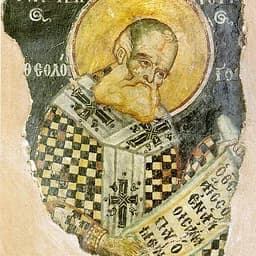
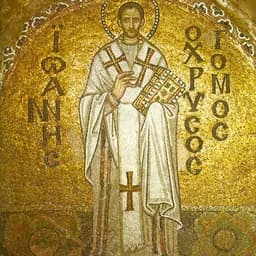
St. Gregory the Theologian

Theological Oration III (On the Son)

He was born—but He had been begotten: He was born of a woman—but she was a Virgin. The first is human, the second Divine. In His Human nature He had no Father, but also in His Divine Nature no Mother. Both these belong to Godhead.

St. John Chrysostom

Homilies on the Gospel of Matthew, Homily IV (Matthew 1:17)

Nor think that thou hast learnt all, by hearing “of the Spirit;” nay, for we are ignorant of many things, even when we have learnt this; as, for instance, how the Infinite is in a womb, how He that contains all things is carried, as unborn, by a woman; how the Virgin bears, and continues a virgin. How, I pray thee, did the Spirit frame that Temple? how did He take not all the flesh from the womb, but a part thereof, and increased it, and fashioned it?

Homilies on the Gospel of Matthew, Homily IV (Matthew 1:17)

For that He did come forth of the Virgin’s flesh, He hath declared by speaking of “that which was conceived in her;” and Paul, by saying, “made of a woman;” whereby he stops the mouths of them that say, Christ came among us as through some conduit. For, if this were so, what need of the womb? If this were so, He hath nothing in common with us, but that flesh is of some other kind, and not of the mass which belongs to us. How then was He of the root of Jesse? How was He a rod? how Son of man? how was Mary His mother? how was He of David’s seed? how did he “take the form of a servant?” how “was the Word made flesh?” and how saith Paul to the Romans, “Of whom as concerning the flesh Christ came, who is God over all?” Therefore that He was of us, and of our substance, and of the Virgin’s womb, is manifest from these things, and from others beside; but how, is not also manifest. Do not either thou then inquire; but receive what is revealed, and be not curious about what is kept secret.

St. Augustine of Hippo

Tractates on the Gospel of John, Tractate VIII (John 2:1–4)

For while He was God and the Lord of heaven and earth, He came by a mother who was a woman. In that He was Lord of the world, Lord of heaven and earth, He was, of course, the Lord of Mary also; but in that wherein it is said, “Made of a woman, made under the law,” He was Mary’s son. The same both the Lord of Mary and the son of Mary; the same both the Creator of Mary and created from Mary. Marvel not that He was both son and Lord. For just as He is called the son of Mary, so likewise is He called the son of David; and son of David because son of Mary. Hear the apostle openly declaring, “Who was made of the seed of David according to the flesh.” Hear Him also declared the Lord of David; let David himself declare this: “The Lord said to my Lord, Sit Thou on my right hand.” And this passage Jesus Himself brought forward to the Jews, and refuted them from it. How then was He both David’s son and David’s Lord? David’s son according to the flesh, David’s Lord according to His divinity; so also Mary’s son after the flesh, and Mary’s Lord after His majesty.

St. Cyril of Alexandria

Commentary on the Gospel of Luke, Sermon I (Luke 1:1-2:7)

For a union of two natures was made, and therefore we confess One Christ, One Son, One Lord. And it is with reference to this notion of a union without confusion that we proclaim the holy Virgin to be the mother of God, because God the Word was made flesh and became man, and by the act of conception united to Himself the temple that He received from her. For we perceive that two natures, by an inseparable union, met together in Him without confusion, and indivisibly. For the flesh is flesh, and not deity, even though it became the flesh of God: and in like manner also the Word is God, and not flesh, though for the dispensation's sake He made the flesh His own.

Of the Holy Spirit and the Virgin Mary

St. Ignatius of Antioch

The Epistle to the Ephesians, Chapter XIX

Now the virginity of Mary was hidden from the prince of this world, as was also her offspring, and the death of the Lord; three mysteries of renown, which were wrought in silence by God.

St. Ambrose of Milan

Exposition of the Gospel according to Luke, as preserved in the Catena Aurea on Luke (on Luke 1:27–38)

Scripture has rightly mentioned that she was espoused, as well as a virgin; a virgin, that she might appear free from all connexion with man; espoused, that she might not be branded with the disgrace of sullied virginity, whose swelling womb seemed to bear evident marks of her corruption. But the Lord had rather that men should cast a doubt upon His birth than upon His mother's purity.

St. John Chrysostom

Homilies, as preserved in the Catena Aurea on Luke (on Luke 1:26–35)

Look not for the order of nature in things which transcend and overpower nature. Dost thou say, How shall this be, seeing I know not a man? Nay rather, shall it happen to thee for this very reason, that thou hast never known a husband. For if thou hadst, thou wouldest not have been thought worthy of the mystery, not that marriage is unholy, but virginity more excellent. It became the common Lord of all both to take part with us, and to differ with us in His nativity; for the being born from the womb, He shared in common with us, but in that He was born without cohabitation, He was exalted far above us.

Ever-Virgin

St. John Chrysostom

Homilies on the Gospel of Matthew, Homily V (Matthew 1:22, 23)

And when he had taken her, “he knew her not, till she had brought forth her first-born Son.” He hath here used the word “till,” not that thou shouldest suspect that afterwards he did know her, but to inform thee that before the birth the Virgin was wholly untouched by man. But why then, it may be said, hath he used the word, “till”? Because it is usual in Scripture often to do this, and to use this expression without reference to limited times. For so with respect to the ark likewise, it is said, “The raven returned not till the earth was dried up.” And yet it did not return even after that time. And when discoursing also of God, the Scripture saith, “From age until age Thou art,” not as fixing limits in this case. And again when it is preaching the Gospel beforehand, and saying, “In his days shall righteousness flourish, and abundance of peace, till the moon be taken away,” it doth not set a limit to this fair part of creation.

Homilies on the Gospel of Matthew, Homily V (Matthew 1:22, 23)

Thus, what it was necessary for thee to learn of Him, this He Himself hath said; that the Virgin was untouched by man until the birth; but that which both was seen to be a consequence of the former statement, and was acknowledged, this in its turn he leaves for thee to perceive; namely, that not even after this, she having so become a mother, and having been counted worthy of a new sort of travail, and a child-bearing so strange, could that righteous man ever have endured to know her. For if he had known her, and had kept her in the place of a wife, how is it that our Lord commits her, as unprotected, and having no one, to His disciple, and commands him to take her to his own home?

St. Augustine of Hippo

Tractates on the Gospel of John, Tractate XXVIII (John 7:1–13)

The blood relations of the Virgin Mary used to be called the Lord’s brethren. For it was of the usage of Scripture to call blood relations and all other near kindred by the term brethren, which is foreign to our usage, and not within our manner of speech. For who would call an uncle or a sister’s son “brother”? Yet the Scripture calls relatives of this kind “brothers.” For Abraham and Lot are called brothers, while Abraham was Lot’s uncle. Laban and Jacob are called brothers, while Laban was Jacob’s uncle. When, therefore, you hear of the Lord’s brethren, consider them the blood relations of Mary, who did not a second time bear children. For, as in the sepulchre, where the Lord’s body was laid, neither before nor after did any dead lie; so, likewise, Mary’s womb, neither before nor after conceived anything mortal.

St. Cyril of Alexandria

Commentary on the Gospel of Luke, Sermon I (Luke 1:1-2:7)

But in answer to those who argue that, if He were brought forth in the flesh, the Virgin was corrupted: and if she were not corrupted, that He was brought forth only in appearance, we say; the prophet declares, "the Lord, the God of Israel, hath entered in and gone out, and the gate remaineth closed." If, moreover, the Word was made flesh without sexual intercourse, being conceived altogether without seed, then was He born without injury to her virginity.

Commentary on the Gospel of Luke, Sermon I (Luke 1:1-2:7)

In what sense then her firstborn? By firstborn she here means, not the first among several brethren, but one who was both her first and only son: for some such sense as this exists among the significations of "firstborn." For sometimes also the Scripture calls that the first which is the only one; as "I am God, the First, and with Me there is no other." To shew then that the Virgin did not bring forth a mere man, there is added the word firstborn; for as she continued to be a virgin, she had no other son but Him Who is of the Father: concerning Whom God the Father also proclaims by the voice of David, "And I will set Him Firstborn high among the kings of the earth."

The New Eve

St. Cyril of Jerusalem

The Catechetical Lectures, Lecture XII: On the words Incarnate, and Made Man

Through Eve yet virgin came death; through a virgin, or rather from a virgin, must the Life appear: that as the serpent beguiled the one, so to the other Gabriel might bring good tidings.

St. Gregory of Nyssa

As preserved in the Catena Aurea on Luke (on Luke 1:28–35)

Far different then to the news formerly addressed to the woman, is the announcement now made to the Virgin. In the former, the cause of sin was punished by the pains of childbirth; in the latter, through gladness, sorrow is driven away. Hence the Angel not unaptly proclaims joy to the Virgin, saying, Hail.

St. Cyril of Alexandria

Commentary on the Gospel of Luke, Sermon II (Luke 2:8-18)

Understand, O man, the depth of the mystery! God was in visible form like unto us: the Lord of all in the likeness of a slave, albeit the glory of lordship is inseparable from Him. Understand that the Only-begotten was made flesh; that He endured to be born of a woman for our sakes, to put away the curse pronounced upon the first woman: for to her it was said, "In pains shalt thou bring forth children:" for it was as bringing forth unto death, that they endured the sting of death. But because a woman has brought forth in the flesh the Immanuel, Who is Life, the power of the curse is loosed, and along with death have ceased also the pains that earthly mothers had to endure in bringing forth.

In Prophecy and Figure

St. Cyril of Jerusalem

The Catechetical Lectures, Lecture XII: On the words Incarnate, and Made Man

For I say nothing of the fact that Aaron’s rod also produced in a single night what other trees produce in several years. For who knows not that a rod, after losing its bark, will never sprout, not even if it be planted in the midst of rivers? But since God is not dependent on the nature of trees, but is the Creator of their natures, the unfruitful, and dry, and barkless rod budded, and blossomed, and bare almonds. He, then, who for the sake of the typical high-priest gave fruit supernaturally to the rod, would He not for the sake of the true High-Priest grant to the Virgin to bear a child?

St. John Chrysostom

Homilies on the Gospel of John, Homily XXVI (John 3:6)

For, because no one would easily have believed that a virgin could bear a child, barren women first did so, then such as were not only barren, but aged also. That a woman should be made from a rib was indeed far more wonderful than that the barren should conceive; but because that was of early and old time, another figure, new and fresh, was given, that of the barren women; to prepare the way for belief in the Virgin’s travail.

Behold the Handmaid of the Lord

St. Gregory of Nyssa

As preserved in the Catena Aurea on Luke (on Luke 1:28–35)

O blessed is that womb which because of the overflowing purity of the Virgin Mary has drawn to itself the gift of life! For in others scarcely indeed shall a pure soul obtain the presence of the Holy Spirit, but in her the flesh is made the receptacle of the Spirit.

St. Ambrose of Milan

Exposition of the Gospel according to Luke, as preserved in the Catena Aurea on Luke (on Luke 1:27–38)

Behold now the humility, the devotion of the Virgin. For it follows, But Mary said, Behold the handmaid of the Lord. She calls herself His handmaid, who is chosen to be His mother, so far was she from being exalted by the sudden promise. ... For about to bring forth One meek and lowly, she was bound herself to shew forth lowliness. As it follows, Be it unto me according to thy word.

Exposition of the Gospel according to Luke, as preserved in the Catena Aurea on Luke (on Luke 1:39–45)

The Angel, when he announced the hidden mysteries to the Virgin, that he might build up her faith by an example, related to her the conception of a barren woman. When Mary heard it, it was not that she disbelieved the oracle, or was uncertain about the messenger, or doubtful of the example, but rejoicing in the fulfilment of her wish, and conscientious in the observance of her duty, she gladly went forth into the hill country. For what could Mary now, filled with God, but ascend into the higher parts with haste!

Exposition of the Gospel according to Luke, as preserved in the Catena Aurea on Luke (on Luke 1:46–47)

The soul of Mary therefore magnifies the Lord, and her spirit rejoiced in God, because with soul and spirit devoted to the Father and the Son, she worships with a pious affection the one God from whom are all things. But let every one have the spirit of Mary, so that he may rejoice in the Lord.

St. Augustine of Hippo

As preserved in the Catena Aurea on Luke (on Luke 1:48–49)

O true lowliness, which has borne God to men, has given life to mortals, made new heavens and a pure earth, opened the gates of Paradise, and set free the souls of men. The lowliness of Mary was made the heavenly ladder, by which God descended upon earth.

The Mother of Jesus

St. Ambrose of Milan

As preserved in the Catena Aurea on John

Mary, as became the mother of our Lord, stood before the cross, when the Apostles fled, and with pitiful eyes beheld the wounds of her Son. For she looked not on the death of the Hostage, but on the salvation of the world.

St. Augustine of Hippo

Tractates on the Gospel of John, Tractate X (John 2:12–21)

For in a certain place, when He was informed that His mother and His brethren were standing without, at the time He was speaking to His disciples, He said: “Who is my mother? or who are my brethren? And stretching out His hand over His disciples, He said, These are my brethren;” and, “Whosoever shall do the will of my Father, the same is my mother, and brother, and sister.” Therefore also Mary, because she did the will of the Father. What the Lord magnified in her was, that she did the will of the Father, not that flesh gave birth to flesh. Give good heed, beloved. Moreover, when the Lord was regarded with admiration by the multitude, while doing signs and wonders, and showing forth what lay concealed under the flesh, certain admiring souls said: “Happy is the womb that bare Thee: and He said, Yea, rather, happy are they that hear the word of God, and keep it.” That is to say, even my mother, whom ye have called happy, is happy in that she keeps the word of God: not because in her the Word was made flesh and dwelt in us; but because she keeps that same word of God by which she was made, and which in her was made flesh.

Tractates on the Gospel of John, Tractate CXIX (John 19:24–30)

When Jesus therefore saw His mother, and the disciple standing by whom He loved, He saith unto His mother, Woman, behold thy son! Then saith He to the disciple, Behold thy mother! And from that hour the disciple took her unto his own home.” This, without a doubt, was the hour whereof Jesus, when about to turn the water into wine, had said to His mother, “Woman, what have I to do with thee? mine hour is not yet come.” This hour, therefore, He had foretold, which at that time had not yet arrived, when it should be His to acknowledge her at the point of death, and with reference to which He had been born as a mortal man. At that time, therefore, when about to engage in divine acts, He repelled, as one unknown, her who was the mother, not of His divinity, but of His [human] infirmity; but now, when in the midst of human sufferings, He commended with human affection [the mother] by whom He had become man. For then, He who had created Mary became known in His power; but now, that which Mary had brought forth was hanging on the cross.

St. Bede the Venerable

As preserved in the Catena Aurea on Luke (on Luke 2:41–52)

Mark the wisest of mothers, Mary the mother of true wisdom, becomes the scholar or disciple of the Child. For she yielded to Him not as to a boy, nor as to a man, but as unto God.