The Fathers on the Gospels
← All topics

Topic

Prayer

The Church confesses that prayer is converse with God, the lifting up of the heart to Him, and that men ought always to pray, and not to faint. The Son of God, who as man prayed for us, gave His disciples the prayer 'Our Father', and through Him the faithful pray to the Father in the Holy Spirit, for one another and for all men, the living and the departed. Here the Fathers teach the way of prayer in their own words.

44 passages from 14 Fathers, drawn from 21 works.

Converse with God

St. Ambrose of Milan

As preserved in the Catena Aurea on Luke

For if David who was occupied also in the necessary affairs of a kingdom was so holy, that seven times in the day he gave praise to God, what ought we to do who ought so much the more to pray, as we more frequently sin, through the weakness of our mind and body?

St. John Chrysostom

As preserved in the Catena Aurea on Luke

Gladly accept the Lord's encouragement: be willing to do what He commands, not to do what He forbids. Lastly, consider what a blessed privilege is granted you, to talk with God in your prayers, and make known to Him all your wants, while He though not in words, yet by His mercy, answers you, for He despises not petitions, He tires not but when you are silent.

St. Augustine of Hippo

From the Catena Aurea on Luke 18 (trans. J. H. Newman, 1841), drawing on his exposition of the passage

In order to pray then, we must have faith, and that our faith fail not, we must pray. Faith pours forth prayer, and the pouring forth of the heart in prayer gives steadfastness to faith.

St. Cyril of Alexandria

Commentary on the Gospel of Luke, Sermon CXIX (Luke 18:1-8)

For it is, I affirm, the duty of those who set apart their lives for His service, not to be sluggish in their prayers, nor again to consider it as a hard and laborious duty: but rather to rejoice, because of the freedom of access granted them by God; for He would have us converse with Him as sons with a father. Is not this then a privilege worthy of being valued by us most highly? For suppose that some one of those possessed of great earthly power were easy of access to us, and were to permit us to converse with him with full license, should we not consider it as a reason for extraordinary rejoicing? What possible doubt can there be of this? When therefore God permits us each one to offer our addresses unto Him for whatever we wish, and has set before those who fear Him an honour so truly great and worthy of their gaining, let all slothfulness cease that would lead men to an injurious silence therein; and rather let us draw near with praises, and rejoicing that we have been commanded to converse with the Lord and God of all, having Christ as our Mediator, who with God the Father grants us the accomplishment of our supplications.

Christ at Prayer

St. Gregory the Theologian

Theological Oration IV (Which is the Second Concerning the Son)

For to intercede does not imply to seek for vengeance, as is most men’s way (for in that there would be something of humiliation), but it is to plead for us by reason of His Mediatorship, just as the Spirit also is said to make intercession for us. For there is One God, and One Mediator between God and Man, the Man Christ Jesus. For He still pleads even now as Man for my salvation; for He continues to wear the Body which He assumed, until He make me God by the power of His Incarnation; although He is no longer known after the flesh—I mean, the passions of the flesh, the same, except sin, as ours. Thus too, we have an Advocate, Jesus Christ, not indeed prostrating Himself for us before the Father, and falling down before Him in slavish fashion…Away with a suspicion so truly slavish and unworthy of the Spirit! For neither is it seemly for the Father to require this, nor for the Son to submit to it; nor is it just to think it of God. But by what He suffered as Man, He as the Word and the Counsellor persuades Him to be patient. I think this is the meaning of His Advocacy.

St. John Chrysostom

Homilies on the Gospel of Matthew, Homily L (Matthew 14:23-24)

For what purpose doth He go up into the mountain? To teach us, that loneliness and retirement is good, when we are to pray to God. With this view, you see, He is continually withdrawing into the wilderness, and there often spends the whole night in prayer, teaching us earnestly to seek such quietness in our prayers, as the time and place may confer. For the wilderness is the mother of quiet; it is a calm and a harbor, delivering us from all turmoils.

Homilies on the Gospel of Matthew, Homily LXXXIII (Matthew 26:36-38)

And He prays with earnestness, in order that the thing might not seem to be acting. And sweats flow over him for the same cause again, even that the heretics might not say this, that He acts the agony. Therefore there is a sweat like drops of blood, and an angel appeared strengthening Him, and a thousand sure signs of fear, lest any one should affirm the words to be feigned. For this cause also was this prayer. By saying then, “If it be possible, let it pass from me,” He showed His humanity; but by saying, “Nevertheless not as I will, but as Thou wilt,” He showed His virtue and self-command, teaching us even when nature pulls us back, to follow God.

St. Augustine of Hippo

Expositions on the Psalms, Psalm 32 (on Matthew 26:39)

Christ thus as man shews a certain private human will, in which He who is our head figures both His own will and ours when He says, "Let it pass from me." For this was His human will choosing something as apart for Himself. But because as man He would be righteous and guide Himself by God's will, He adds, "Nevertheless not as I will, but as thou wilt;" as much as to say to us, Man, behold thyself in Me, that thou canst will somewhat apart of thyself, and though God's will is other, this is permitted to human frailty.

St. Cyril of Alexandria

Commentary on the Gospel of Luke, Sermon LXX (Luke 11:1-4)

For if He ate and drank, and is found partaking of sleep, what is there absurd, if also having humbled Himself to our measure, and fulfilled human righteousness, He not unfitly offered up prayer? And yet certainly He is in need of nothing; for "He is full," as we already said. For what reason therefore, and in the performance of what necessary and profitable duty, did He pray? It was to teach us not to be slack in this matter, but rather to be constant in prayers, and very urgent; not standing in the middle of the streets; for this some of the Jews used to do, the scribes namely and Pharisees; nor making it an occasion of ostentation, but rather praying alone and silently, and by ourselves: and, so to speak, conversing alone with God alone, with pure and undistracted mind.

The Lord's Prayer

Tertullian

On Prayer, chapters 2, 6, 8 (on Matthew 6:9–13). Trans. in the Ante-Nicene Fathers, Vol. 3

"Lead us not into temptation:" that is, suffer us not to be led into it, by him (of course) who tempts; but far be the thought that the Lord should seem to tempt, ... as if He either were ignorant of the faith of any, or else were eager to overthrow it.

St. Cyril of Jerusalem

The Catechetical Lectures, Mystagogical Lecture V

Then, after these things, we say that Prayer which the Saviour delivered to His own disciples, with a pure conscience entitling God our Father, and saying, Our Father, which art in heaven. O most surpassing loving-kindness of God! On them who revolted from Him and were in the very extreme of misery has He bestowed such a complete forgiveness of evil deeds, and so great participation of grace, as that they should even call Him Father. Our Father, which art in heaven; and they also are a heaven who bear the image of the heavenly, in whom is God, dwelling and walking in them.

The Catechetical Lectures, Mystagogical Lecture V

Hallowed be Thy Name. The Name of God is in its nature holy, whether we say so or not; but since it is sometimes profaned among sinners, according to the words, Through you My Name is continually blasphemed among the Gentiles, we pray that in us God’s Name may be hallowed; not that it comes to be holy from not being holy, but because it becomes holy in us, when we are made holy, and do things worthy of holiness.

13. Thy kingdom come. A pure soul can say with boldness, Thy kingdom come; for he who has heard Paul saying, Let not therefore sin reign in your mortal body, and has cleansed himself in deed, and thought, and word, will say to God, Thy kingdom come.

14. Thy will be done as in heaven so on earth. God’s divine and blessed Angels do the will of God, as David said in the Psalm, Bless the Lord, all ye Angels of His, mighty in strength, that do His pleasure. So then in effect thou meanest this by thy prayer, “as in the Angels Thy will is done, so likewise be it done on earth in me, O Lord.”

The Catechetical Lectures, Mystagogical Lecture V

And lead us not into temptation, O Lord. Is this then what the Lord teaches us to pray, that we may not be tempted at all? How then is it said elsewhere, “a man untempted, is a man unproved;” and again, My brethren, count it all joy when ye fall into divers temptations? But does perchance the entering into temptation mean the being overwhelmed by the temptation? For temptation is, as it were, like a winter torrent difficult to cross. Those therefore who are not overwhelmed in temptations, pass through, shewing themselves excellent swimmers, and not being swept away by them at all; while those who are not such, enter into them and are overwhelmed. As for example, Judas having entered into the temptation of the love of money, swam not through it, but was overwhelmed and was strangled both in body and spirit. Peter entered into the temptation of the denial; but having entered, he was not overwhelmed by it, but manfully swam through it, and was delivered from the temptation.

St. John Chrysostom

Homilies on the Gospel of Matthew, Homily XIX (Matthew 6:1)

“After this manner, therefore, pray ye,” saith He: “Our Father, which art in heaven.”

See how He straightway stirred up the hearer, and reminded him of all God’s bounty in the beginning. For he who calls God Father, by him both remission of sins, and taking away of punishment, and righteousness, and sanctification, and redemption, and adoption, and inheritance, and brotherhood with the Only-Begotten, and the supply of the Spirit, are acknowledged in this single title. For one cannot call God Father, without having attained to all those blessings. Doubly, therefore, doth He awaken their spirit, both by the dignity of Him who is called on, and by the greatness of the benefits which they have enjoyed. But when He saith, “in Heaven,” He speaks not this as shutting up God there, but as withdrawing him who is praying from earth, and fixing him in the high places, and in the dwellings above.

Homilies on the Gospel of John, Homily XLIII (John 6:16-18)

And for such hath Christ also taught us to pray; for if we unfold that Prayer, we shall find that there is nothing carnal in it, but all spiritual, and that even the small portion which seemeth to relate to sense, becometh by the manner spiritual. For to bid us ask no more than our “successive,” that is, our “daily,” bread, would mark a mind spiritual and truly wise. And consider what goeth before that, “Hallowed be Thy Name, Thy kingdom come, Thy will be done as in heaven so on earth”; then, after naming that temporal (need), He quickly leaveth it, and bringeth us again to the spiritual doctrine, saying, “Forgive us our debts, as we forgive our debtors.” Nowhere hath He put in the Prayer riches or glory or dominion, but all things contributing to the benefit of the soul; nothing earthly, but all things heavenly. If then we are bidden to refrain from the things of this present life, how could we help being wretched and miserable, asking from God those things which even having He biddeth us cast away, to free us from care about them, and for which He biddeth us take no pains. This is the “using vain repetition”; and this is why we effect nothing by our prayers.

On the Statues, Homily XX

What punishment then must he not deserve, who when he would receive ten thousand talents, in the room of a hundred pence, yet will not even so remit this small sum, but offers up the Prayer against himself. For when thou sayest, “Forgive us, as we forgive,” and afterwards dost not forgive, thou art supplicating of God nothing else than that He would entirely deprive thee of all excuse or indulgence. “But I do not presume to say,” replies some one, “Forgive me as I forgive” but only, “Forgive me.” But what matters this? For if thou say it not thyself, yet God so doeth; as thou forgivest, He forgives. And this He hath made quite evident from what follows; for there it is said, “If ye forgive not men, neither doth your heavenly Father forgive you.” Think not, therefore, that it is a pious caution, not to repeat the whole sentence; nor offer up the Prayer by halves, but as He bade thee so pray thou, in order that the very obligation of that expression, putting thee daily in fear, may compel thee to the exercise of forgiveness towards thy neighbours.

St. Augustine of Hippo

Tractates on the Gospel of John, Tractate VII (John 1:34–51)

For those who have a cause, and wish to supplicate the emperor, seek for some one skilled in the law, and trained in the schools, to compose their petition for them; lest perchance, if they ask in an unbecoming manner, they not only do not obtain what they seek, but get punishment instead of a benefit. When, therefore, the apostles sought to petition, and could not find how to approach the Emperor God, they said unto Christ, “Lord, teach us to pray;” that is to say, “O thou who art our skilled One in the law, our Assessor, yea, the Concessor of God, compose for us prayers.” And the Lord taught them from the book of the celestial law, taught them how to pray; and in that which He taught, He laid down a certain condition: “Forgive us our debts, as we also forgive our debtors.” If thou seekest not according to the law, thou becomest guilty. Dost thou not tremble before the Emperor, having become guilty? Offer the sacrifice of humility, offer the sacrifice of mercy; pray, saying, Forgive me, for I also forgive. But if thou sayest, do. For what wilt thou do? whither wilt thou go if thou hast lied in thy prayers?

St. Cyril of Alexandria

Commentary on the Gospel of Luke, Sermon LXXI (Luke 11:2)

He commands us therefore to take boldness, and say in our prayers, "Our Father." We children of earth and slaves, and subject by the law of nature to Him Who created us, call Him Who is in heaven Father. And most fittingly He makes those who pray understand this also: that if we call God Father, and have been counted worthy of so distinguished an honour, must we not necessarily lead holy and thoroughly blameless lives, and so behave as is pleasing to our Father, and neither think nor say anything unworthy or unfit for the freedom that has been bestowed upon us? And so one of the holy apostles spoke: "If you call Him Father, Who without respect of persons judges according to every man's work, let your conversation during the time of your sojourning be in fear." For it is a most serious thing to grieve and provoke a father, by turning aside to those things which are not right.

When Thou Prayest

St. Cyprian of Carthage

Treatise on the Lord's Prayer (on Matthew 6:5–6). As preserved in the Catena Aurea on Matthew

The Lord has bid us in His instructions to pray secretly in remote and withdrawn places, as best suited to faith; that we may be assured that God who is present every where hears and sees all, and in the fulness of His Majesty penetrates even hidden places.

St. Cyril of Jerusalem

The Catechetical Lectures, Mystagogical Lecture V

After this the Priest cries aloud, “Lift up your hearts.” For truly ought we in that most awful hour to have our heart on high with God, and not below, thinking of earth and earthly things. In effect therefore the Priest bids all in that hour to dismiss all cares of this life, or household anxieties, and to have their heart in heaven with the merciful God. Then ye answer, “We lift them up unto the Lord:” assenting to it, by your avowal. But let no one come here, who could say with his mouth, “We lift up our hearts unto the Lord,” but in his thoughts have his mind concerned with the cares of this life. At all times, rather, God should be in our memory but if this is impossible by reason of human infirmity, in that hour above all this should be our earnest endeavour.

St. John Chrysostom

Homilies on the Gospel of Matthew, Homily XIX (Matthew 6:1)

“Rend,” as the prophet commanded, “thine heart, and not thy garments.” Out of deeps call upon God, for it is said, “Out of the depths have I cried to Thee, O Lord.” From beneath, out of the heart, draw forth a voice, make thy prayer a mystery. Seest thou not that even in the houses of kings all tumult is put away, and great on all sides is the silence? Do thou also therefore, entering as into a palace,—not that on the earth, but what is far more awful than it, that which is in heaven,—show forth great seemliness. Yea, for thou art joined to the choirs of angels, and art in communion with archangels, and art singing with the seraphim. And all these tribes show forth much goodly order, singing with great awe that mystical strain, and their sacred hymns to God, the King of all. With these then mingle thyself, when thou art praying, and emulate their mystical order.

For not unto men art thou praying, but to God, who is everywhere present, who hears even before the voice, who knows the secrets of the mind. If thou so pray, great is the reward thou shalt receive.

Homilies on the Gospel of Matthew, Homily LI (Matthew 15:1)

“What then, if I have been overtaken?” saith one. Cleanse thyself. “How, and in what way?” Weep, groan, give alms, apologize to him that is affronted, reconcile him to thyself hereby, wipe clean thy tongue, lest thou provoke God more grievously. For so if one had filled his hands with dung, and then should lay hold of thy feet, entreating thee, far from hearing him, thou wouldest rather spurn him with thy foot; how then durst thou in such sort draw nigh to God? Since in truth the tongue is the hand of them that pray, and by it we lay hold on the knees of God. Defile it not therefore, lest to thee also He say, “Though ye make many prayers, I will not hearken.”

St. Cyril of Alexandria

Commentary on the Gospel of Luke, Sermon XXIII (Luke 6:6-13)

All that Christ did was for our edification, and for the benefit of those who believe in Him; and by proposing to us His own conduct as a sort of pattern of the spiritual mode of life, He would make us true worshippers. Let us see, therefore, in the pattern and example provided for us by Christ's acts, the manner in which we ought to make our supplications unto God. We must pray secretly and in concealment, and with no one seeing us: for this is the signification of Jesus going into the mountain alone, and praying, as it were, leisurely. And this He has Himself taught us, saying; "But thou, when thou prayest, enter into thy closet." For we ought to pray, not seeking after glory, but "lifting up holy hands," while the soul, as it were, mounts aloft to the contemplation of God, withdrawing from all tumult, and quitting worldly anxiety. And this we must do not with fickleness, nor with a listless feebleness; but, on the contrary, with earnestness and zeal, and a patience worthy of admiration: for thou hast heard that Jesus did not merely pray, but that He also passed the night in this duty.

Commentary on the Gospel of Luke, Sermon LXX (Luke 11:1-4)

For there are men who make a gain of the reputation of piety, and while earnestly attending to outward appearances, within are full of the love of vainglory. These often, when entering the church, first of all glance about in every direction, to observe the number of those standing there, and see whether they have many spectators. And as soon as the assembly pleases them, then raising their hand to their forehead, not once merely, but again and again they make there the sign of the precious cross. And so spinning out a long prayer according to their own fancy, they babble in a loud tone, as though praying to the bystanders, rather than to God. To such we say in the words of the Saviour, "You have received your reward:" since you pray as hunting after the praises of men, and not as seeking any thing of God. Your wish is fulfilled; you have been praised as being religious; you have gained vainglory: but you have traded in a fruitless labour; you have sown emptiness, and you shall reap nothing.

Commentary on the Gospel of Luke, Sermon CXX (Luke 18:9-14)

Let us therefore "pray without ceasing," according to the expression of the blessed Paul: but let us be careful to do so aright. The love of self is displeasing to God, and He rejects empty haughtiness and a proud look, puffed up often on account of that which is by no means excellent. And even if a man be good and sober, let him not on this account suffer himself to fall away into shameful pride: but rather let him remember Christ, Who says to the holy apostles, "When you have done all those things, those namely which have been commanded you, say, We are unprofitable servants, we have done that which was our duty to do." For we owe unto God over all, as from the yoke of necessity, the service of slaves, and ready obedience in all things. Yes, though you lead an excellent and elect life, don't exact wages from the Lord; but rather ask of Him a gift. As being good, He will promise it you: as a loving Father, He will aid you. Restrain not yourself then from saying, "God be merciful to me the sinner."

Ask, and It Shall Be Given You

St. Basil the Great

As preserved in the Catena Aurea on Luke

For whenever you ask and receive not, it is because your request was improperly made, either without faith, or lightly, or for things which are not good for you, or because you left off praying. ... He knows undoubtedly, and gives us richly all temporal things even before we ask. But we must first desire good works, and the kingdom of heaven; and then having desired, ask in faith and patience, bringing into our prayers whatever is good for us, convicted of no offense by our own conscience.

St. Ambrose of Milan

From his Exposition of the Gospel of Luke, as preserved in the Catena Aurea on Luke (on Luke 23:39–43), Oxford ed. (J. H. Parker, 1841–45)

And grace is more abundant than prayer; for the Lord ever gives more than He is asked for. The thief asked that He should remember him, but our Lord answers, Verily I say unto thee, This day shalt thou be with Me in Paradise. To be with Christ is life, and where Christ is, there is His kingdom.

St. John Chrysostom

Homilies on the Gospel of Matthew, Homily XIX (Matthew 6:1)

“For He knoweth,” saith He, “what things ye have need of.” And if He know, one may say, what we have need of, wherefore must we pray? Not to instruct Him, but to prevail with Him; to be made intimate with Him, by continuance in supplication; to be humbled; to be reminded of thy sins.

Homilies on the Gospel of Matthew, Homily XXIII (Matthew 7:1)

However, not simply to ask did He command us, but with much assiduity and earnestness. For this is the meaning of “seek.” For so he that seeks, putting all things out of his mind, is taken up with that alone which is sought, and forms no idea of any of the persons present. And this which I am saying they know, as many as have lost either gold, or servants, and are seeking diligently after them.

By “seeking,” then, He declared this; by “knocking,” that we approach with earnestness and a glowing mind.

Despond not therefore, O man, nor show less of zeal about virtue, than they do of desire for wealth. For things of that kind thou hast often sought and not found, but nevertheless, though thou know this, that thou art not sure to find them, thou puttest in motion every mode of search; but here, although having a promise that thou wilt surely receive, thou dost not show even the smallest part of that earnestness. And if thou dost not receive straightway, do not even thus despair. For to this end He said, “knock,” to signify that even if He should not straightway open the door, we are to continue there.
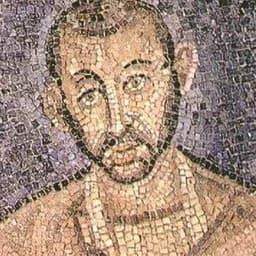
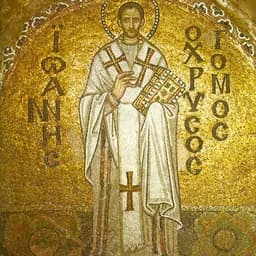
St. Augustine of Hippo

Tractates on the Gospel of John, Tractate LXXIII (John 14:10–14)

The Lord, by His promise, gave those whose hopes were resting on Himself a special ground of confidence, when He said, “For I go to the Father; and whatsoever ye shall ask in my name, I will do it.” His proceeding, therefore, to the Father, was not with any view of abandoning the needy, but of hearing and answering their petitions. But what is to be made of the words, “Whatsoever ye shall ask,” when we behold His faithful ones so often asking and not receiving? Is it, shall we say, for no other reason but that they ask amiss? For the Apostle James made this a ground of reproach when he said, “Ye ask and receive not, because ye ask amiss, that ye may consume it upon your lusts.” What one, therefore, wishes to receive, in order to turn to an improper use, God in His mercy rather refuses to bestow. Nay, more, if a man asks what would, if answered, only tend to his injury, there is surely greater cause to fear, lest what God could not withhold with kindness, He should give in His anger.

St. Cyril of Alexandria

Commentary on the Gospel of Luke, Sermon LXXVIII (Luke 11:5-10)

Be urgent in prayer; draw near to God Who loves to be kind; and that very constantly. And if you see that the gift of grace is delayed, yield not to weariness: despair not of the expected blessing: abandon not the hope set before you; nor further foolishly say within yourself, 'I have drawn near frequently; I have gained absolutely nothing; I have wept, and received not; I have supplicated, but not been accepted: for of all I asked, nothing has been accomplished.' Rather think thus within yourself, that He Who is the universal treasure house better knows our state than we do, in that He weighs to every man what is due and suitable to him. You ask sometimes what is beyond your measure; you wish to receive those things of which you are not yet worthy. The Giver Himself knows the time suitable for His gifts. Earthly fathers do not immediately and without discretion fulfil the desire of their sons: but often delay in spite of their asking, and that not because they have a grudging hand, nor again because they regard (merely) what is pleasant to the petitioners, but as considering what is useful and necessary for their good conduct.

St. Bede the Venerable

From his Commentary on Mark, as preserved in the Catena Aurea on Mark

Not every man, however, who prays goes up into a mountain, but he alone prays well, who seeks God in prayer. But he who prays for riches or worldly labour, or for the death of his enemy, sends up from the lowest depths his vile prayers to God.

Theophylact of Ohrid

From his Explanation of the Gospel of Mark, as preserved in the Catena Aurea on Mark

The reason, therefore, why the Lord does not immediately hear, but delays His grace, is, that He may also shew that the faith of the woman was firm, and that we may learn not at once to grow weary in prayer, but to continue earnest till we obtain.

Watch and Pray

St. John Chrysostom

Homilies on the Gospel of Matthew, Homily LVII (Matthew 17:10)

He that fasts is light, and winged, and prays with wakefulness, and quenches his wicked lusts, and propitiates God, and humbles his soul when lifted up. Therefore even the apostles were almost always fasting. He that prays with fasting hath his wings double, and lighter than the very winds. For neither doth he gape, nor stretch himself, nor grow torpid in prayer, as is the case with most men, but is more vehement than fire, and rises above the earth. Wherefore also such a one is most especially a hater and an enemy to the evil spirits. For nothing is mightier than a man who prays sincerely. For if a woman had power to prevail with a savage ruler, one neither fearing God, nor regarding man; much more will he prevail with God, who is continually waiting upon Him, and controlling the belly, and casting out luxury. But if thy body be too weak to fast continually, still it is not too weak for prayer, nor without vigor for contempt of the belly.

St. Cyril of Alexandria

Commentary on the Gospel of Luke, Sermon LXXVIII (Luke 11:5-10)

Knock, be urgent, ask. So must all act who ask any thing of God: for wise Paul writes, "Pray without ceasing." We are in need of urgent prayer, because many are the turmoils of worldly matters which encircle us around: for that many headed serpent greatly distresses us, involving us sometimes in unexpected difficulties, that he may humble us to baseness and manifold sin: and, besides this, there is also the inbred law of voluptuousness lurking in our fleshly members, and warring, as Scripture says, "against the law of our mind:" and lastly, the enemies of the doctrines of truth, even the impure and polluted gangs of heretics, oppose those who wish to hold correct opinions. Constant and earnest prayer therefore is necessary. For arms and the implements of warfare are needed for soldiers, that they may be able to overcome those who are drawn up against them: and for us prayer, "for our weapons," as Scripture says "are not carnal, but mighty to God."

Commentary on the Gospel of Luke, Sermon CXLVII (Luke 22:39-46)

He was praying therefore, when already those who were to seize Him were at the door. And let no man of understanding say, that He offered these supplications as being in need of strength or help from another: — for He is Himself the Father's almighty strength and power: — but it was that we might hereby learn, ever to put away from us carelessness when temptation harasses, and persecution presses upon us, and perfidy contrives for us its snare, and makes ready the net of death. For it is the very means of our salvation to watch and fall upon our knees, and make constant supplications, and ask for the aid that comes from above, lest perchance it be our lot to grow weak, and suffer a most terrible shipwreck.

St. Leo the Great

Sermon 58 (on Matthew 26:42)

This speech of the Head is the health of the whole body, this saying is instruction to the faithful, animates the confessor, crowns the martyr. For who could vanquish the hatred of the world, or the whirlwind of temptations, or the terrors of the persecutors, if Christ did not in all and for all say to the Father, "Thy will be done." Let all the sons of the Church then utter this prayer, that when the pressure of some mighty temptation lies upon them, they may embrace endurance of the suffering, disregarding its terrors.

St. Gregory the Great

As preserved in the Catena Aurea on Luke

Those that went before Jesus, as He was coming, represent the multitude of carnal desires, and the busy crowd of vices which before that Jesus comes to our heart, scatter our thoughts, and disturb us even in our prayers. But the blind man cried out the more; for the more violently we are assailed by our restless thoughts, the more fervently ought we to give ourselves to prayer.

Pray for One Another

St. Ignatius of Antioch

The Epistle to the Ephesians, Chapter X

And pray ye without ceasing in behalf of other men. For there is in them hope of repentance that they may attain to God. See, then, that they be instructed by your works, if in no other way. Be ye meek in response to their wrath, humble in opposition to their boasting: to their blasphemies return your prayers; in contrast to their error, be ye stedfast in the faith; and for their cruelty, manifest your gentleness.

St. Cyprian of Carthage

On the Lord's Prayer (Treatise IV) (on Matthew 6:9–13). Trans. in the Ante-Nicene Fathers, Vol. 5

Before all things, the Teacher of peace and the Master of unity would not have prayer to be made singly and individually, as for one who prays to pray for himself alone. ... Our prayer is public and common; and when we pray, we pray not for one, but for the whole people, because we the whole people are one.

St. Cyril of Jerusalem

The Catechetical Lectures, Mystagogical Lecture V

Then we commemorate also those who have fallen asleep before us, first Patriarchs, Prophets, Apostles, Martyrs, that at their prayers and intercessions God would receive our petition. Then on behalf also of the Holy Fathers and Bishops who have fallen asleep before us, and in a word of all who in past years have fallen asleep among us, believing that it will be a very great benefit to the souls, for whom the supplication is put up, while that holy and most awful sacrifice is set forth.

10. And I wish to persuade you by an illustration. For I know that many say, what is a soul profited, which departs from this world either with sins, or without sins, if it be commemorated in the prayer? For if a king were to banish certain who had given him offence, and then those who belong to them should weave a crown and offer it to him on behalf of those under punishment, would he not grant a remission of their penalties? In the same way we, when we offer to Him our supplications for those who have fallen asleep, though they be sinners, weave no crown, but offer up Christ sacrificed for our sins, propitiating our merciful God for them as well as for ourselves.

St. John Chrysostom

Homilies on the Gospel of John, Homily LXXI (John 13:12)

The injured man uses any weapon that comes to hand, when, being little of soul, he defends himself against one who has injured him, by curses, by abuse, by plotting. Do thou then not only not do these things, but even pray for him; for if thou do them not, but wilt even pray for him, thou art become like unto God. For, “pray,” it saith, “for them, that despitefully use you—that ye may be like unto your Father which is in Heaven.” (Matt. v. 44, 45.) Seest thou how we are the greatest gainers from the insolence of others? Nothing so delighteth God, as the not returning evil for evil? But what say I? Not returning evil for evil? Surely we are enjoined to return the opposite, benefits, prayers.

St. Cyril of Alexandria

Commentary on the Gospel of Luke, Sermon XLVIII (Luke 9:12-17)

For to draw near, and make supplication on the people's behalf, is an act becoming to the saints, and the duty of spiritual fathers, and the proof of a mind that has regard not to selfish objects alone, but already considers as its own the interests of others: of which surpassing love this is a clear and very evident instance. And if we may be permitted to carry our argument above the level of human things, we say, for the benefit of such as meet with it, that when in earnest prayer we continue with Christ, whether asking of Him healing for the maladies of our souls, or deliverance from other sicknesses, or desiring to obtain anything whatsoever for our advantage; there is no doubt that when we ask in prayer any thing that is good for us, there supplicate in our behalf both the intelligent powers, and those holy men who have freedom of access unto Him.

Commentary on the Gospel of Luke, Sermon LXXII (Luke 11:2)

But do not imagine, that when those who depend upon His love are earnest in their supplications towards God, that they ask these things of Him for themselves alone: but know rather, that their purpose is to intercede for all the dwellers upon earth: for those who already have believed; and for those who have not as yet received the faith, nor acknowledged the truth. For for those who already have believed, they ask that their faith may be established, and that they may be able to practise the glories of the more excellent life: while for those who as yet are not believers, they ask that they may be called, and their eyes be opened; even in this following the footsteps of Christ, Who according to the words of John is "the Advocate with the Father for our sins: and not for our's only, but for the whole world." He therefore Who is the Intercessor for the saints, and for the whole world, wills that His disciples be like Himself.